Curriculum
Curriculum
Filters
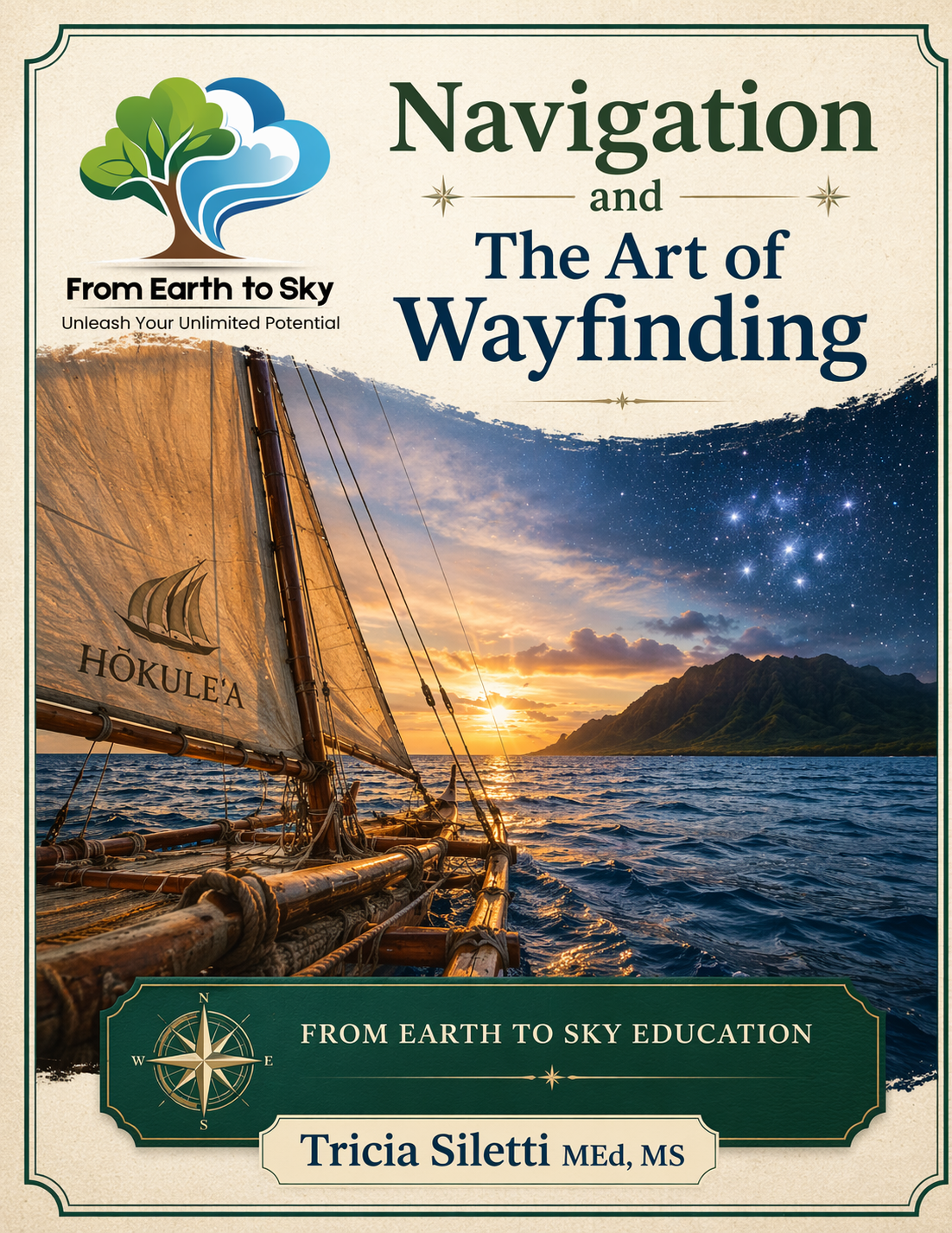
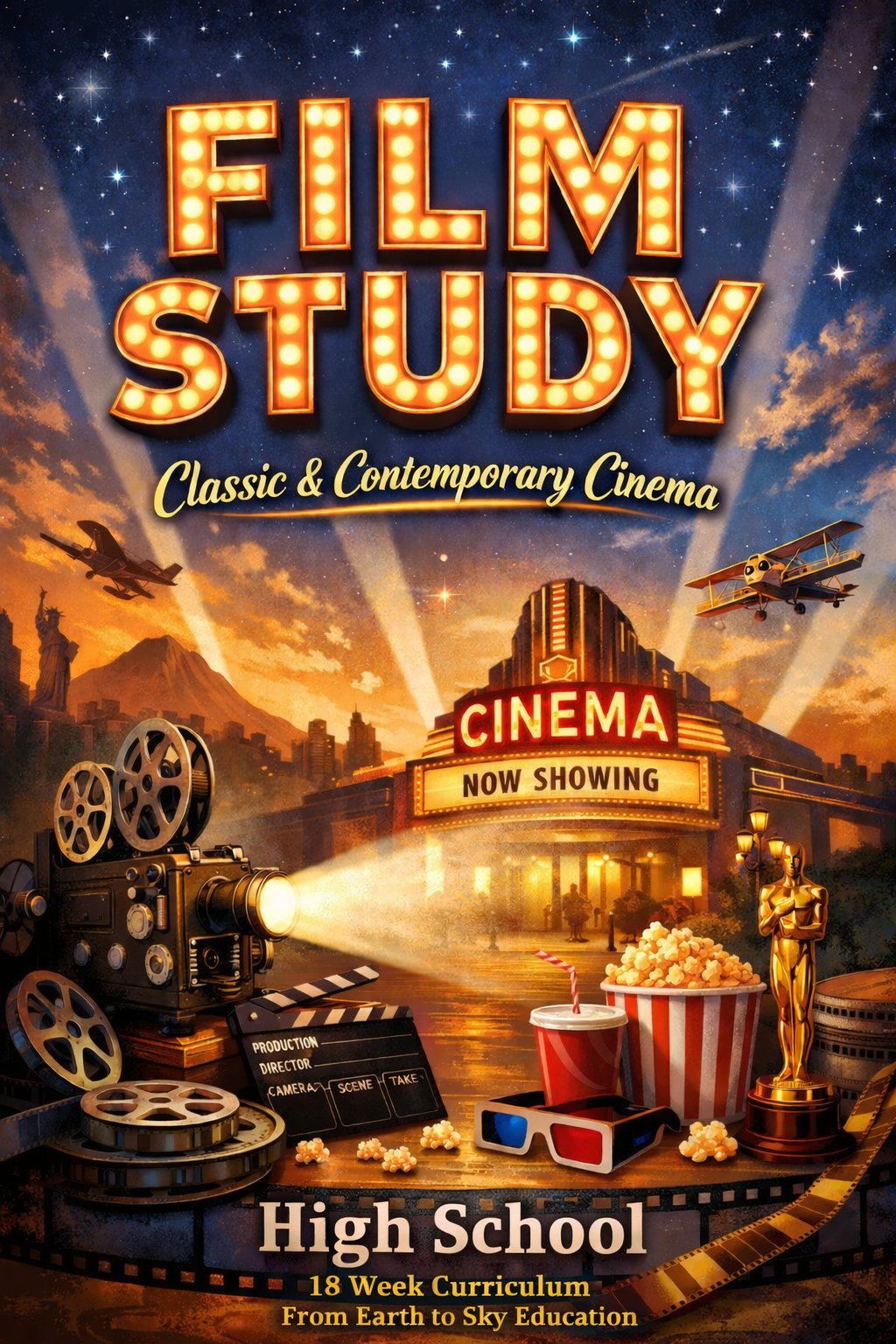
An 18-Week Homeschool Curriculum
Transform your student from passive viewer to perceptive film analyst with this comprehensive cinema studies course. By examining Hollywood's greatest classics alongside today's most acclaimed films, students discover that the art of storytelling has evolved dramatically while its core principles remain timeless.
What Students Will Learn
This course teaches students to "read" film the way they read literature. Through carefully paired classic and modern films, students master the visual language of cinema: composition, camera movement, editing, sound design, lighting, and narrative structure. They learn to analyze why certain shots create tension, how color conveys emotion, and what separates good filmmaking from great filmmaking.
Course Highlights
Students watch and analyze films including Citizen Kane, The Wizard of Oz, Casablanca, Rear Window, and Lawrence of Arabia paired with modern counterparts like The Social Network, La La Land, Knives Out, Get Out, and Dunkirk. Each pairing illuminates how filmmakers across generations approach similar storytelling challenges.
Hands-On Learning
This is not a sit-and-watch course. Students maintain detailed film analysis journals, create storyboards, experiment with camera techniques using their smartphones, design their own lighting setups, write original scenes, and complete a capstone project where they produce their own short film, create a video essay, or remake a classic scene with their own interpretation.
Skills That Transfer
The analytical and creative skills developed in this course extend far beyond film appreciation. Students strengthen critical thinking, visual literacy, persuasive writing, research skills, and creative problem-solving. They learn to support arguments with evidence, identify bias in media, and communicate complex ideas clearly.
What's Included
The complete curriculum provides everything you need: weekly lesson plans with clear daily structure, vocabulary instruction, discussion guides, 12 detailed worksheets, journal prompts for 61 entries, research paper guidelines, and final project options with assessment rubrics. Simply add the films and press play.
Weekly Structure
Day 1: Film screening with structured journal response (90-120 minutes) Day 2: Technique study, vocabulary, and discussion (60-90 minutes) Day 3: Creative activities and hands-on application (60-90 minutes)
Perfect For
Students who love movies and want to understand them more deeply. Students who need an engaging fine arts or English elective credit. Future filmmakers, writers, actors, or media professionals. Visual learners who connect with story through images. Any high schooler ready to see familiar entertainment through entirely new eyes.
By Tricia Siletti | From Earth to Sky Education
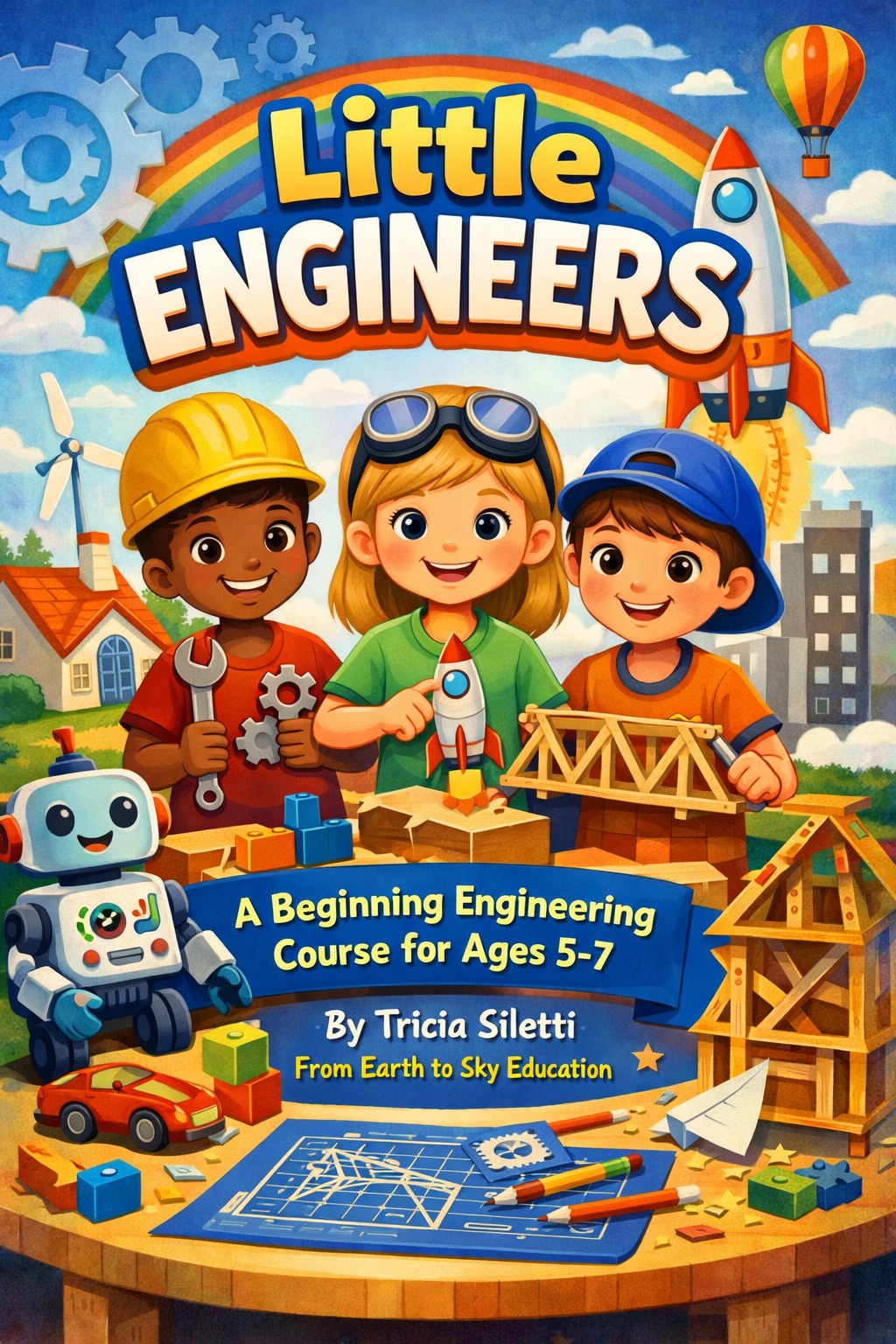
Children are natural engineers.
They build towers, invent machines, test ideas, and ask endless questions about how the world works. Little Engineers transforms that natural curiosity into an exciting introduction to real engineering concepts through hands-on building and exploration.
Designed specifically for young learners ages 5–7, this 15-week course introduces foundational engineering ideas through creative challenges using simple household materials. Children will design, build, test, and improve their creations just like real engineers.
Throughout the course, students learn that failure is not a problem. It is part of the discovery process.
Each lesson follows a simplified engineering design process:
Ask → Imagine → Plan → Create → Test → Improve
This approach helps children build confidence, resilience, and problem-solving skills while having fun creating amazing inventions. Little_Engineers_Curriculum_Age…
What Your Child Will Learn
Students explore a wide variety of engineering concepts including:
• Building strong structures and towers
• Designing bridges that can carry weight
• Understanding ramps, motion, and gravity
• Creating working cars with wheels and axles
• Launching objects with simple machines like levers
• Building cranes using pulleys
• Designing boats that float and carry cargo
• Harnessing wind power with pinwheels
• Building parachutes and learning about air resistance
• Exploring magnets and invisible forces
• Understanding sound through vibrations
• Creating shadow theaters with light and design
• Engineering protective packaging for fragile objects
• Learning how nature inspires inventions
By the end of the course, students will apply everything they learned to design and build their own original engineering project.
Course Structure
15 Weeks | 30 Lessons | 100% Hands-On Learning
Each week includes two engaging lessons designed for 30–45 minutes of focused activity, perfect for the attention span of young learners. Little_Engineers_Curriculum_Age…
Every lesson includes:
• A read-aloud book connection
• A guided engineering challenge
• Simple materials list
• Discussion questions to deepen understanding
• Opportunities to test and improve designs
Most materials are everyday household items such as cardboard, paper tubes, popsicle sticks, rubber bands, foil, cups, and string.
No expensive kits required.
Skills Children Develop
Beyond engineering knowledge, this course strengthens critical life skills:
• Creative problem solving
• Resilience and perseverance
• Spatial reasoning
• Scientific thinking
• Collaboration and communication
• Confidence in trying new ideas
Children begin to see themselves as builders, inventors, and thinkers.
Perfect For
• Homeschool families
• Microschools and co-ops
• STEM clubs
• Curious young builders
• Parents who want hands-on learning without screens
The From Earth to Sky Education Philosophy
At From Earth to Sky Education, learning is not about memorizing facts. It is about discovering how the world works through exploration and creation.
Little Engineers gives children the freedom to build, experiment, and imagine while developing the foundational thinking skills that real engineers use every day.
Because the future belongs to the builders.
By Tricia Siletti / From Earth to Sky Education
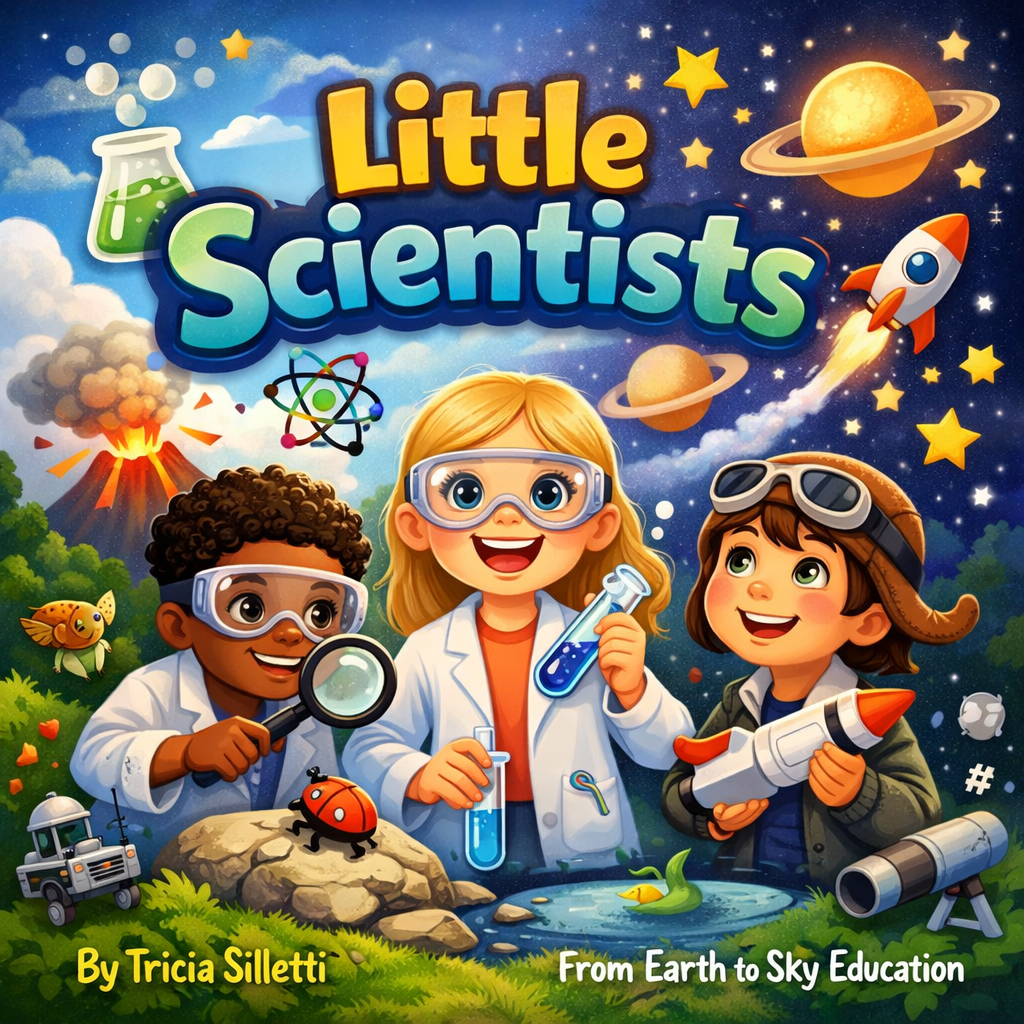
Children are natural scientists. They are constantly asking questions, testing ideas, and exploring the world around them.
Little Scientists is a hands-on homeschool science course designed to nurture that curiosity while introducing young learners to the foundations of scientific thinking.
Created for ages 5–7, this engaging course guides children through 15 weeks of discovery using simple experiments, observation, and playful exploration. Each lesson uses common household materials, making science accessible, practical, and exciting for families learning at home.
Rather than memorizing facts, children learn to think like scientists.
They observe carefully.
Ask meaningful questions.
Make predictions.
Test ideas.
And draw conclusions based on what they discover.
Throughout the course, students explore fascinating topics such as:
• The Five Senses and how we experience the world
• Living vs. Non-Living Things
• Plants, animals, and habitats
• Weather and seasons
• Solids and liquids
• Floating and sinking
• Pushes, pulls, ramps, and wheels
• The amazing power of magnets
Each lesson takes 30–45 minutes, making it easy to fit into your homeschool rhythm. Parents begin with a short read-aloud book, guide a simple hands-on experiment, and finish with thoughtful discussion questions that deepen understanding. Little_Scientists_Curriculum
The course builds essential scientific skills including:
• Observation
• Prediction
• Experimentation
• Recording discoveries
• Scientific reasoning
By the end of the program, children will have experienced the joy of real discovery and developed the confidence to keep exploring the world around them.
What Makes This Course Special
✔ Designed specifically for parent-led homeschool instruction
✔ Uses simple household materials
✔ Encourages curiosity and critical thinking
✔ Builds a strong foundation in early scientific concepts
✔ Perfect for ages 5–7
Little Scientists turns everyday moments into scientific adventures and helps children see that learning is not something that happens in a workbook. It happens everywhere.
Build Real Businesses. Learn Real Skills. Sell at a Real Marketplace.
Young Entrepreneurs Academy is an exciting hands-on entrepreneurship course where students learn how to turn their ideas into real businesses.
Over the course of 18 engaging weeks, students move from curiosity to confidence as they design products, build brands, create marketing strategies, and launch their own business at a student-run marketplace event. young-entrepreneurs-academy-cur…
This is not a theoretical business class.
Students actually become entrepreneurs.
They learn to identify opportunities in their community, design a brand, calculate pricing and profit, build a marketing plan, and interact with real customers.
By the end of the course, students experience the excitement of launching a business and selling their products at Market Day, the culminating event where their hard work becomes reality. young-entrepreneurs-academy-cur…
What Students Learn
Throughout the academy, students develop essential real-world skills including:
• Identifying business opportunities in their community
• Designing logos and building a brand
• Creating a marketing strategy
• Writing a simple business plan
• Calculating costs, pricing, and profit
• Finding suppliers and managing inventory
• Delivering excellent customer service
• Pitching business ideas with confidence
• Selling products at a real marketplace
These skills build confidence, creativity, leadership, financial literacy, and problem-solving ability.
Course Structure
Duration: 18 Weeks
Grade Levels: 2nd–7th Grade
Class Length: 60–90 Minutes per Session
The course follows a clear progression:
Discover the entrepreneurial mindset
Identify problems and opportunities
Brainstorm business ideas
Design branding and logos
Build marketing strategies
Develop a business plan
Learn pricing, profit, and inventory management
Practice customer service and sales
Pitch ideas during Shark Week
Launch a real business at Market Day
Students finish the program having built and operated their own small business.
The Market Day Experience
The highlight of the academy is Market Day.
Students set up real booths and sell their products to customers. They greet shoppers, explain their products, handle money, and track sales.
This event transforms the classroom into a real entrepreneurial marketplace and gives students an unforgettable learning experience.
Many students leave this course with businesses they continue running long after the class ends.
Why This Course Matters
Entrepreneurship teaches skills traditional classrooms rarely address:
• Initiative
• Creativity
• Leadership
• Financial literacy
• Communication
• Resilience
Students learn that ideas have value, effort creates opportunity, and failure is simply part of growth.
This course is part of the From Earth to Sky Education philosophy: practical, hands-on learning that prepares students for the real world.
Young Entrepreneurs Academy helps students discover something powerful:
They are capable of building something meaningful from their own ideas.
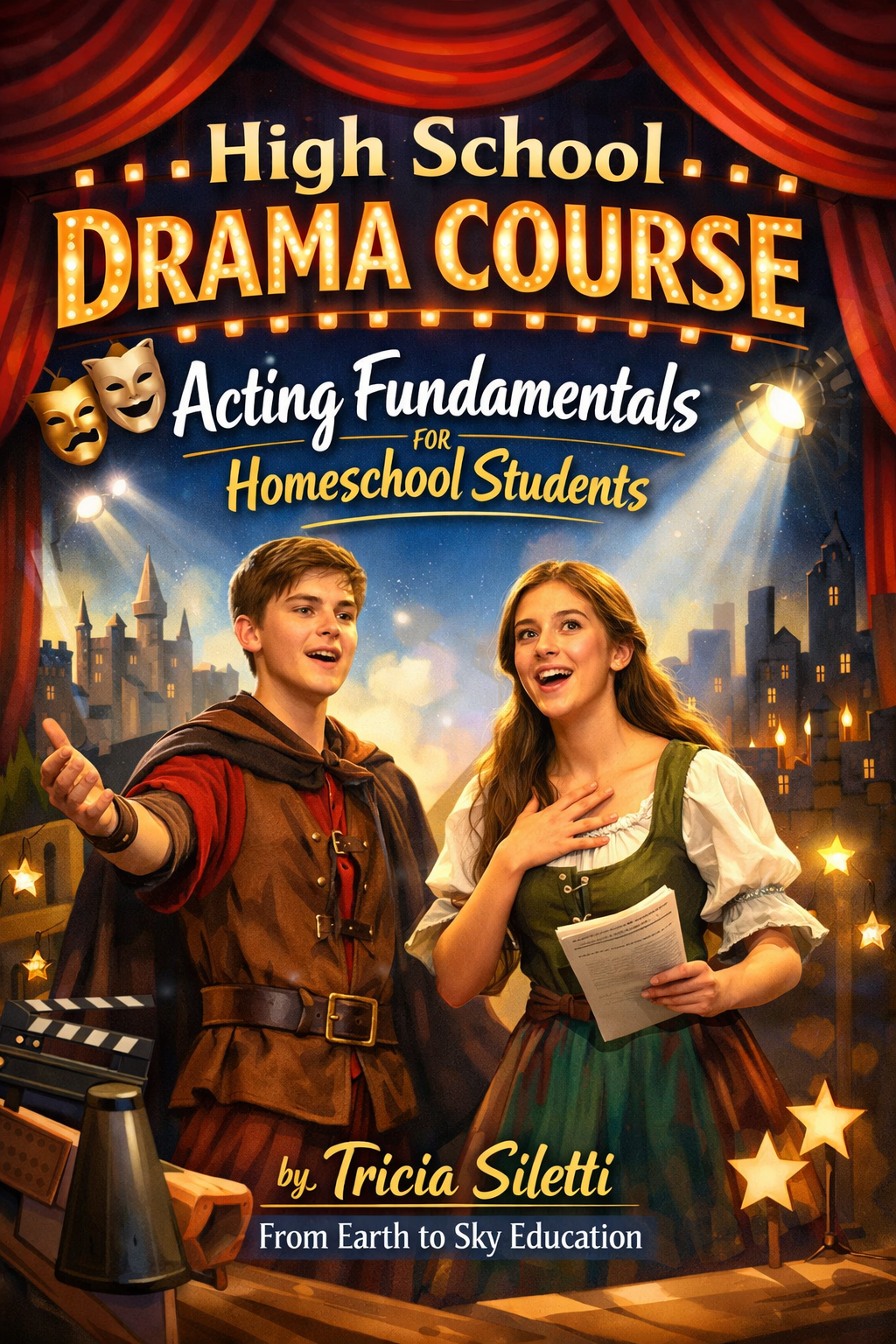
High School Drama Course: Acting Fundamentals for Homeschool Students
By Tricia Siletti | From Earth to Sky Education
Acting is more than performing on stage. It is one of the most powerful ways young people learn confidence, communication, emotional intelligence, and storytelling.
Acting Fundamentals for Homeschool Students is an engaging 18-week high school drama course designed specifically for homeschool learners who want to explore the art of acting while developing real-world skills that will benefit them for life.
In this course, students learn the core techniques actors use to bring characters and stories to life. Through guided exercises, improvisation, script analysis, and performance practice, students develop the tools to express themselves clearly, think creatively, and connect with an audience.
Whether a student dreams of the stage or simply wants to become a stronger communicator, this course builds the confidence and presence that great performers and leaders share.
The curriculum introduces students to body language, voice control, character development, improvisation, and script performance. Students study classic dramatic works such as Sorry, Wrong Number and The Monkey’s Paw, exploring how playwrights create tension, emotion, and powerful storytelling. High School Drama Course_ Actin…
Throughout the semester, students actively practice what they learn through monologues, scene work, improvisation games, and collaborative exercises. The course culminates in a final performance showcase where students present their work and celebrate their growth as performers.
What Students Will Learn
• How to use posture, movement, and facial expression to communicate emotion
• Vocal projection, breathing techniques, and expressive speech
• Character development and storytelling techniques
• Improvisation and creative thinking skills
• Script analysis and understanding dramatic structure
• Monologue and scene performance
• Stage presence and performance confidence
Skills Developed Beyond the Stage
Drama training builds skills that extend far beyond theatre.
Students strengthen:
• Public speaking ability
• Confidence and self-expression
• Critical thinking and creativity
• Emotional awareness and empathy
• Collaboration and teamwork
• Leadership and presentation skills
Course Format
Grade Level: 9th–12th Grade
Duration: 18 Weeks
Schedule: 2–3 sessions per week (45–60 minutes each)
Format: Designed for homeschool families or small groups
The course is structured so that parents can facilitate learning easily, even without theatre experience. Lessons include guided discussion questions, activities, and journaling prompts that help students reflect on their growth as performers and communicators.
Perfect For
• Homeschool students interested in acting or theatre
• Teens who want to become confident speakers
• Students who enjoy storytelling and creative expression
• Homeschool co-ops and small learning groups
The Outcome
By the end of the course, students will not only understand the fundamentals of acting, they will have experienced the transformation that happens when creativity, confidence, and storytelling come together.
Students leave the course with stronger communication skills, deeper self-confidence, and the ability to step forward and perform with clarity and purpose.
By Tricia Siletti / From Earth to Sky Education
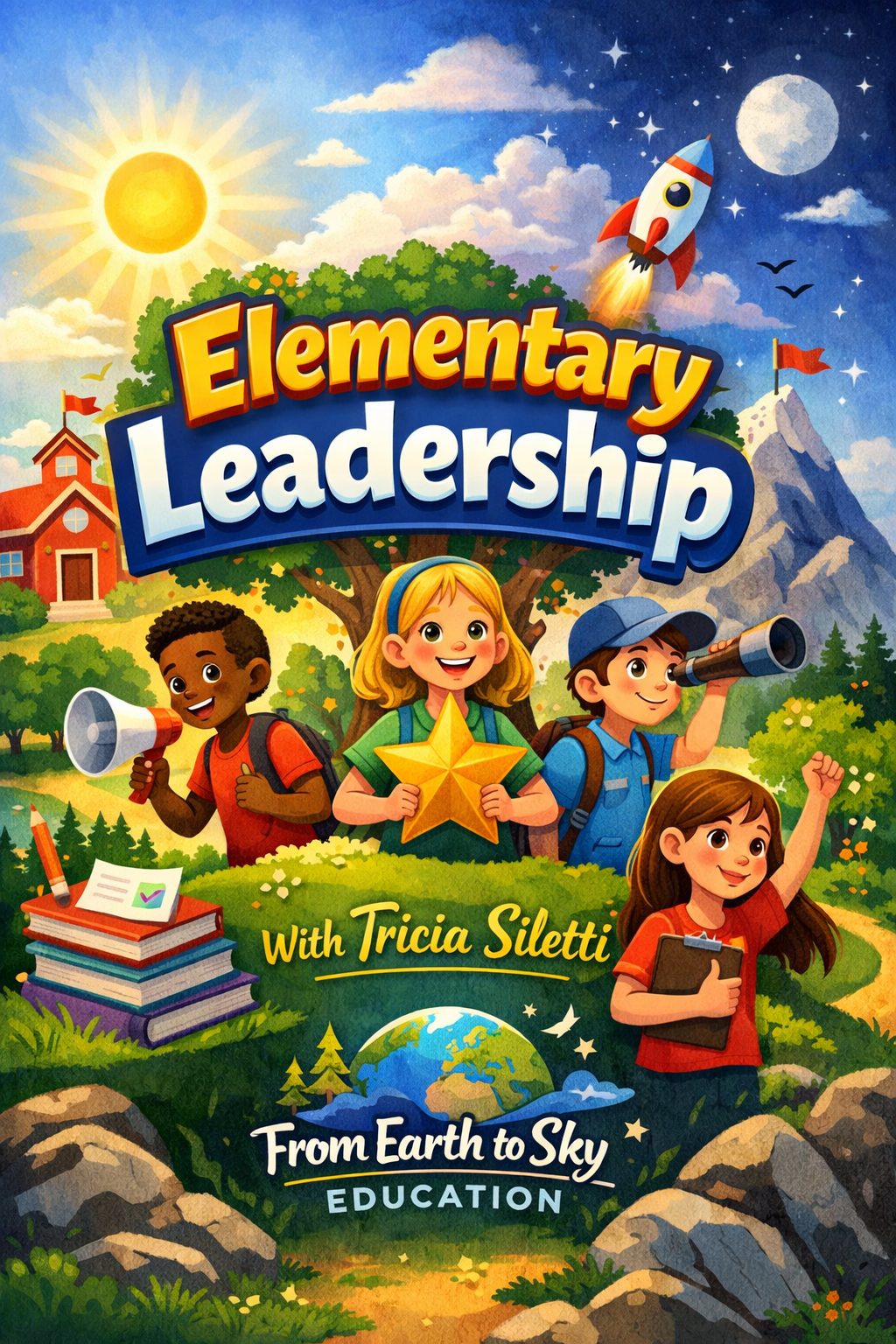
What if leadership was something children practiced instead of something adults simply talked about?
Elementary Leadership is a hands-on leadership course designed specifically for homeschool students that teaches real leadership skills through engaging activities, meaningful challenges, and real-world application.
Instead of worksheets and lectures, students learn by doing.
Throughout this 15-week program, children develop the character, confidence, and decision-making abilities that strong leaders demonstrate in everyday life. Each week introduces a core leadership principle and brings it to life through projects, discussions, experiments, and creative challenges.
Students explore what leadership truly means while practicing the skills that help them become thoughtful decision makers, problem solvers, and positive influences in their communities.
According to the curriculum outline, the program blends character development, teamwork, communication skills, creativity, service, and personal responsibility into an integrated learning experience designed for elementary students. Elemetary Leadership Curriculum…
In This Course Students Will Learn How To
• Communicate clearly and confidently
• Work effectively as part of a team
• Solve problems creatively
• Make thoughtful decisions based on values
• Practice empathy and understand others
• Take responsibility for their actions
• Set goals and follow through
• Develop courage and confidence
• Influence others positively
• Serve their families and communities
What Makes This Course Different
This course is built around experiential learning, which means students learn leadership through action rather than memorization.
Activities include:
• Leadership discovery walks
• Team building engineering challenges
• Escape room collaboration puzzles
• Creative invention labs
• Public speaking mini-talks
• Decision-making simulations
• Kindness campaigns
• Community service projects
• Leadership portfolio creation
• A final leadership graduation ceremony
Students leave the course not only understanding leadership but practicing it in real life.
Course Structure
Length: 15 Weeks
Schedule: 2 sessions per week
Session Time: 45–60 minutes
Each week focuses on a different leadership skill including communication, teamwork, empathy, responsibility, innovation, resilience, and service.
Students build a Leadership Portfolio documenting their growth throughout the program and present their progress during a final Leadership Graduation celebration.
Perfect For
• Homeschool families
• Co-op classes
• Leadership clubs
• Upper elementary students
• Families who want to build strong character and confidence
The Result
Students complete the program with a deeper understanding of themselves, a clear sense of responsibility toward others, and the practical tools needed to lead with integrity.
Leadership is not something reserved for adulthood.
Children are capable of leading now.
This course helps them discover how.
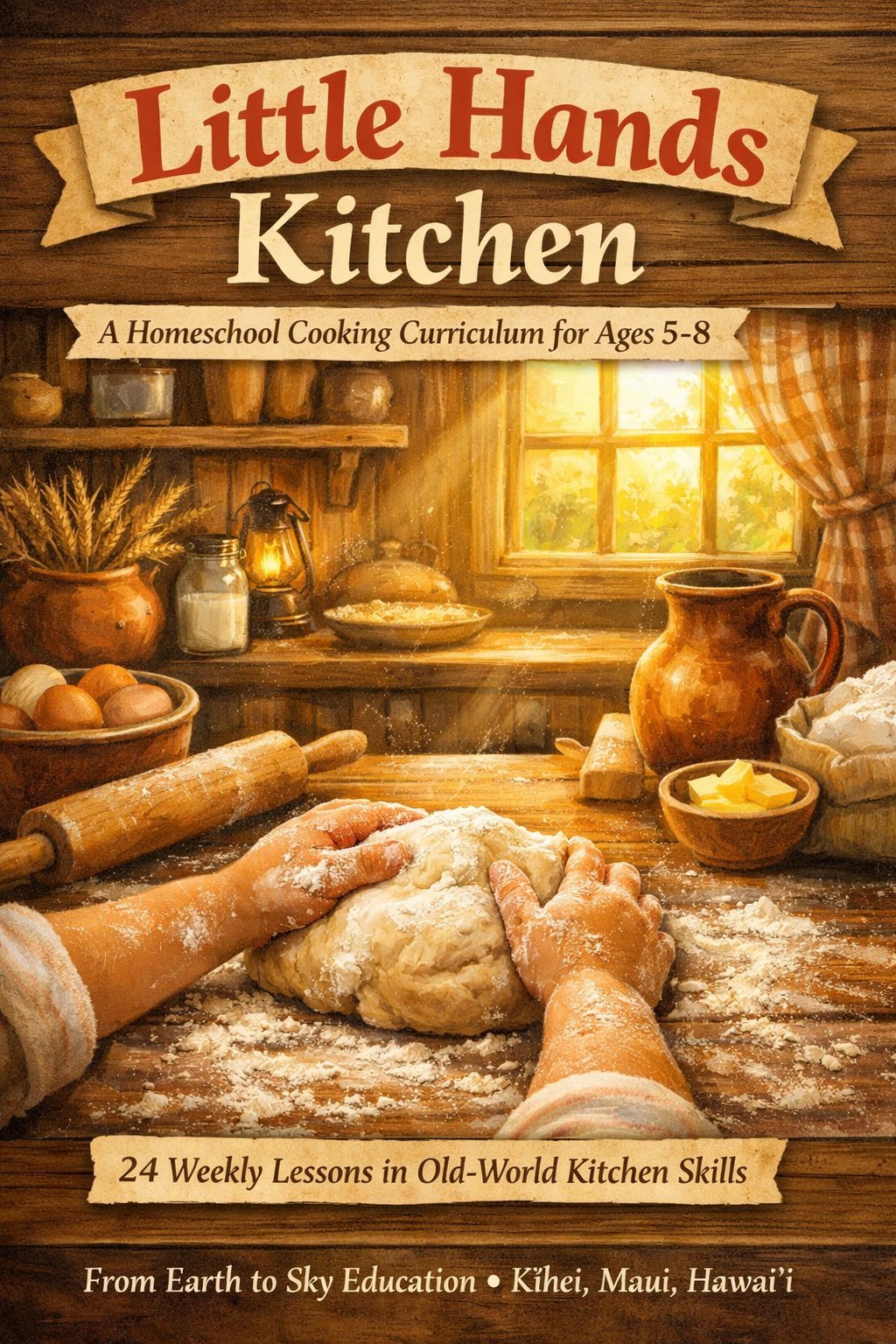
A Homeschool Cooking Curriculum for Elementary aged children
24 Weekly Lessons in Old-World Kitchen Skills
Teach Your Child to Cook Real Food. Teach Them So Much More.
What if your child could learn fractions while measuring flour? Understand chemistry while watching yeast bubble? Explore world history while kneading bread dough passed down through generations?
Little Hands Kitchen is more than a cooking curriculum. It's a complete, multi-subject educational experience disguised as the most delicious school day your child has ever had.
What's Inside
24 complete weekly lessons organized into 8 thematic units, each designed for 60-90 minute sessions. Every lesson includes:
Step-by-step recipes with clear instructions
Specific learning objectives
Hands-on tasks appropriate for ages 5-8
Discussion questions that spark curiosity
Cross-curricular connections to math, science, history, geography, reading, and more
Safety notes for each activity
Recipe continuations showing what to make next
One Recipe. Multiple Subjects. Zero Worksheets.
Here's what a single lesson looks like in action:
Week 1: Homemade Butter
What They're Making: Fresh butter from cream in a mason jar
What They're Actually Learning:
SubjectConnectionSciencePhysical transformation, emulsion breaking, fat molecules clumping togetherMathMeasuring cups, timing each stage, comparing starting vs. ending amountsHistoryHow families preserved food before refrigeration, researching butter churnsPhysical EducationRhythmic shaking builds persistence and coordinationLanguage ArtsNew vocabulary: buttermilk, emulsion, churn
Your child finishes the lesson with butter they made themselves, a deeper understanding of where food comes from, and knowledge that spans five subject areas.
And they had fun doing it.
The 8 Units
Unit 1: Dairy Fundamentals Homemade Butter • Fresh Ricotta Cheese
Unit 2: Yeast Breads Simple Yeast Bread • Pizza Dough
Unit 3: Sourdough Adventures Sourdough Starter & Crackers • Breadsticks • Focaccia • Bagels
Unit 4: Flat Breads & Pasta Hand-Rolled Pasta • Flour Tortillas • Cheese Crackers
Unit 5: Hearty Meals Vegetable Soup • Meatloaf & Scalloped Potatoes • Macaroni & Cheese • Homemade Sausages
Unit 6: Preserving & Condiments Homemade Ketchup • Mayonnaise • Chocolate Syrup • Applesauce • Berry Jam • Refrigerator Pickles
Unit 7: Fermentation Sauerkraut • Kombucha
Unit 8: Sweet Treats Marshmallows (made with real marshmallow root!) • Lilikoi-Date Ice Cream • Whoopie Pies
More Than Recipes: Real Examples of Learning in Action
Making Sourdough Starter (Week 5) Your child captures wild yeast from the air, feeds it daily like a pet, and learns responsibility while exploring microbiology. They'll discover that Gold Rush miners carried starters around their necks to keep them warm. That's science, history, and life skills in a single jar of bubbling flour and water.
Hand-Rolled Pasta (Week 9) Children create a flour "volcano," crack eggs into the crater, and slowly incorporate the flour. They practice fractions (¼ inch for fettuccine, ⅛ inch for linguine), learn about gluten development, and discover that Marco Polo may have encountered noodles in China. One recipe. Math, science, geography, and fine motor skills.
Homemade Ketchup (Week 16) Before cooking, your child reads the ingredient label on store-bought ketchup. High fructose corn syrup. Sodium benzoate. Natural flavors. Then they make their own with just six ingredients: tomatoes, vinegar, honey, and spices. This is consumer education. Critical thinking. And a ketchup that actually tastes like tomatoes.
Vegetable Soup (Week 12) This lesson teaches that there's no single "right" recipe for soup. Children learn knife safety, practice "mise en place," explore how different cultures make soup based on what grows in their region, and discover the vocabulary of cooking: sauté, simmer, dice, mince. The lesson includes Italian Minestrone, French Country, Mexican-Style, and Asian-Inspired variations.
Why This Curriculum Matters
I spent years teaching my oldest child to be more self-sufficient in the kitchen. What started as cooking lessons became something deeper: learning to read ingredient labels, questioning what's really in our food, and understanding that our great-grandparents knew how to make everything from scratch.
The foods on grocery store shelves today are filled with preservatives, artificial ingredients, and chemicals that were never part of the human diet until recent decades. Most families have lost the simple skills to make real food from real ingredients.
This curriculum changes that.
Every recipe uses simple ingredients you can pronounce. Every lesson teaches children not just how to cook, but how to think critically about the food they put into their bodies.
When your child makes their own bread, they realize it only needs flour, water, yeast, and salt.
When they make their own mayonnaise, they discover it's just eggs, oil, lemon, and mustard.
When they ferment their own sauerkraut, they learn that humans preserved food for thousands of years without refrigeration or chemical additives.
These lessons plant seeds of wisdom that will grow throughout their lives.
What Parents Are Saying
"My 6-year-old now reads ingredient labels at the grocery store and asks why there are so many things she can't pronounce. That's worth more than any worksheet."
"We replaced our entire language arts block on Fridays with Little Hands Kitchen. The vocabulary, the reading, the sequencing, the discussion... it covers everything and my kids BEG for cooking day."
"My son struggled with fractions until we started measuring ingredients. Now he gets it. Turns out he just needed to see ½ cup in real life."
What You Get
✓ 24 Complete Lesson Plans covering dairy, breads, sourdough, pasta, meals, condiments, fermentation, and sweets
✓ Full Recipes with ingredients, equipment lists, and step-by-step instructions
✓ Learning Objectives for every lesson
✓ Hands-On Tasks appropriate for ages 5-8
✓ Discussion Questions that encourage curiosity and critical thinking
✓ Cross-Curricular Connections linking each recipe to math, science, history, geography, reading, art, and health
✓ Safety Notes for every activity
✓ Recipe Continuations showing how basic skills lead to advanced techniques
✓ Professional formatting ready to print or use digitally
Perfect For
Homeschool families looking for hands-on, multi-subject learning
Parents who want to teach practical life skills
Families interested in real food and simple ingredients
Co-ops and Homeschool Hui groups seeking engaging Friday activities
Anyone who believes children learn best by doing
Where Reading, Writing, and Imagination Come Together
What if your child could fall in love with writing while building rock-solid grammar skills? What if reading comprehension came naturally because stories finally made sense? That's exactly what happens when literacy meets storytelling.
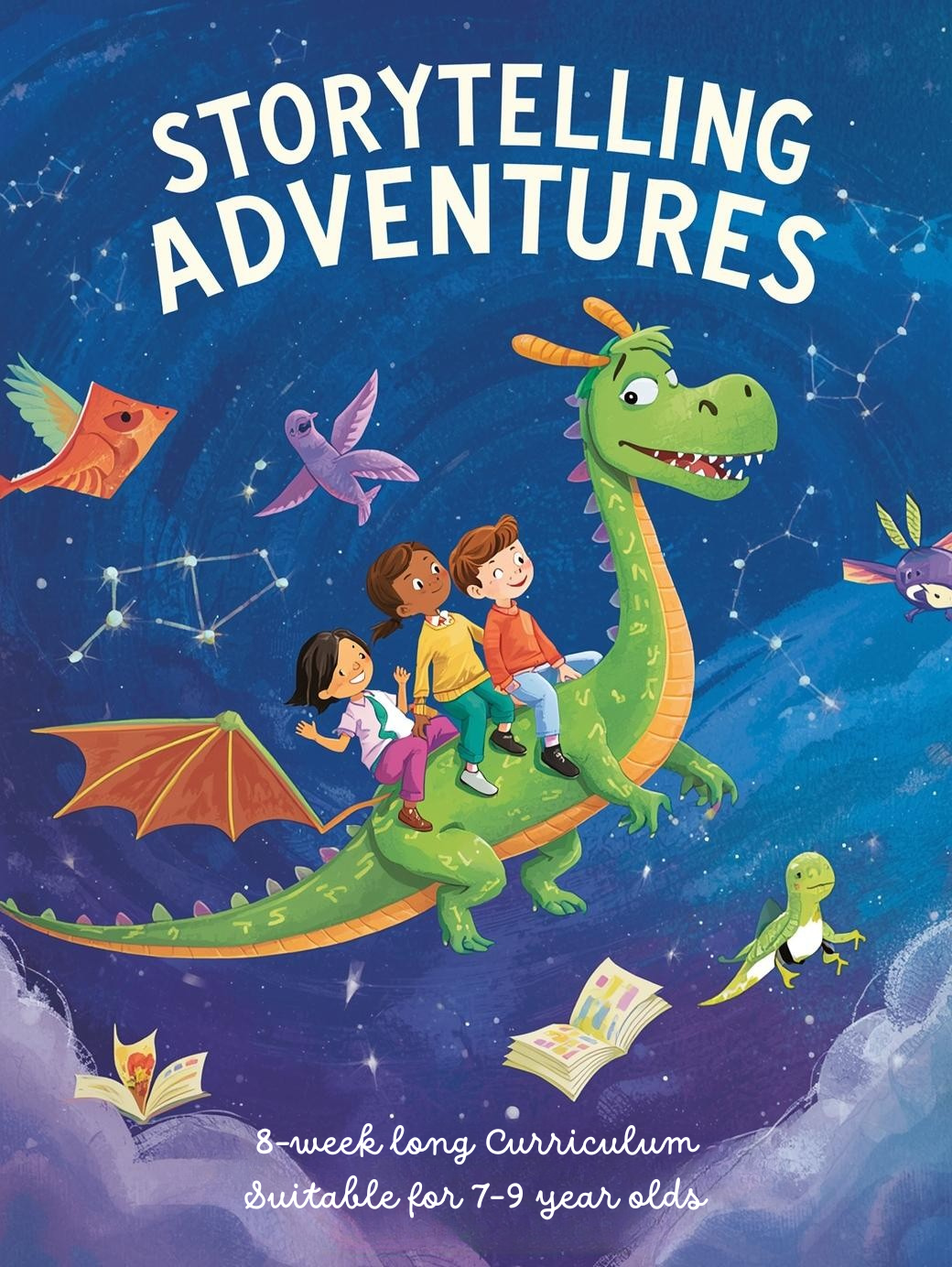
Storytelling Adventures is a comprehensive 15-week curriculum that teaches essential literacy skills through the art of storytelling. Instead of dry worksheets and disconnected grammar drills, your child will learn to read, write, and communicate by doing what humans have done for thousands of years—telling stories.
Perfect For
Ages 7-10 (adaptable for 2nd-5th grade)
Homeschool families seeking a complete language arts solution
Parents who want their children to enjoy writing
Kids who love stories but struggle with "school" writing
Families looking for meaningful together-time activities
What Your Child Will Master
Reading Skills
Story elements analysis (character, setting, plot, theme)
Reading comprehension strategies that stick
Fluency and expressive reading
Genre exploration from mystery to memoir
Writing Skills
Creative writing with confidence
Organized paragraphs and complete stories
Revision and editing techniques
Multiple formats: narratives, descriptions, dialogue
Grammar & Mechanics
Complete sentences and sentence variety
Parts of speech (nouns, verbs, adjectives, prepositions)
Punctuation including dialogue and quotations
Verb tenses and subject-verb agreement
Speaking & Presentation
Oral storytelling with expression
Public speaking confidence
Voice modulation and audience engagement
Family storytelling traditions
What Makes This Curriculum Different
✨ Integration, Not Isolation — Grammar isn't taught in a vacuum. Your child learns adjectives while creating vivid characters and prepositions while building story settings. Skills stick because they're immediately applied.
✨ Flexibility Built In — Designed for real homeschool life. Spread lessons across your week however works for your family. Each week includes 3-5 hours of material you can adapt to your schedule.
✨ Multi-Age Friendly — Every lesson includes differentiation tips for younger (7-8) and older (9-10) learners. Teach multiple children together or customize for your individual learner.
✨ Family Connection — Packed with activities the whole family can enjoy: storytelling circles, character creation workshops, mystery games, and a final showcase celebration.
✨ No Prep Headaches — Everything is ready to use. Vocabulary words are defined. Grammar rules are explained. Activities include step-by-step instructions. Just open and teach.
What's Included
📘 15 Weeks of Complete Lesson Plans
Daily activities organized by reading, writing, and storytelling
Vocabulary instruction with kid-friendly definitions
Grammar lessons with clear explanations and examples
📝 75+ Writing Exercises
Guided practice for every skill
Creative prompts that inspire (not bore)
Revision and editing activities
🎯 Hands-On Activities
Story Element Scavenger Hunts
Character Creation Workshops
Emotion Orchestra Storytelling
Mystery Box Games
Magic Door Writing Adventures
Family Story Circles
📚 Curated Book Lists
30+ recommended read-alouds organized by week
Picture books, chapter books, and series suggestions
Notes on how to use each book
📋 Assessment Tools
Weekly progress checklists
Skills rubrics (Beginning/Developing/Proficient)
Portfolio compilation guide
Certificate of Completion
🎁 Bonus Resources
Cross-curricular connection ideas
Extension activities for eager learners
Materials and supply checklist
A Week at a Glance
Each week follows a consistent, easy-to-implement structure:
Days 1-2: Introduce new concepts through quality read-alouds and guided discussion. Explore vocabulary in context. Begin writing activities.
Days 3-4: Deepen skills with hands-on activities and creative exercises. Practice grammar through meaningful application. Develop storytelling techniques.
Day 5: Review, assess, and celebrate. Add polished work to portfolio. Family sharing time.
Sample Skills by Week
WeekThemeGrammar Focus1Story ElementsComplete Sentences2Character DevelopmentAdjectives3Vivid SettingsPrepositions4Plot & ConflictSequence Words5DialogueQuotation Marks6Descriptive WritingStrong Verbs7Story StructureConjunctions8-9Beginnings & EndingsSentence Variety10Audience AwarenessFormal vs. Informal11Humor & ComedyHomophones12Mystery & SuspenseQuestion Sentences13Personal NarrativePast Tense14Fantasy & DreamsFuture Tense15Portfolio & CelebrationReview & Showcase
What Parents Are Saying
"Finally, a writing curriculum my daughter actually asks to do!"
"The grammar instruction is seamless—my son didn't even realize he was learning parts of speech because he was so focused on his story."
"We've tried so many language arts programs. This is the first one that made everything click."
The Outcome
By the end of this semester, your child will have:
✅ A portfolio of original stories they're proud to share ✅ Confidence in their writing abilities ✅ A solid foundation in grammar and mechanics ✅ Stronger reading comprehension skills ✅ The ability to speak and present with expression ✅ A love of storytelling that will serve them for life
Invest in Your Child's Literacy Journey
Storytelling Adventures: A Complete Semester Literacy Curriculum
📄 Comprehensive 15-week program 📄 Print-ready professional format 📄 Instant digital download
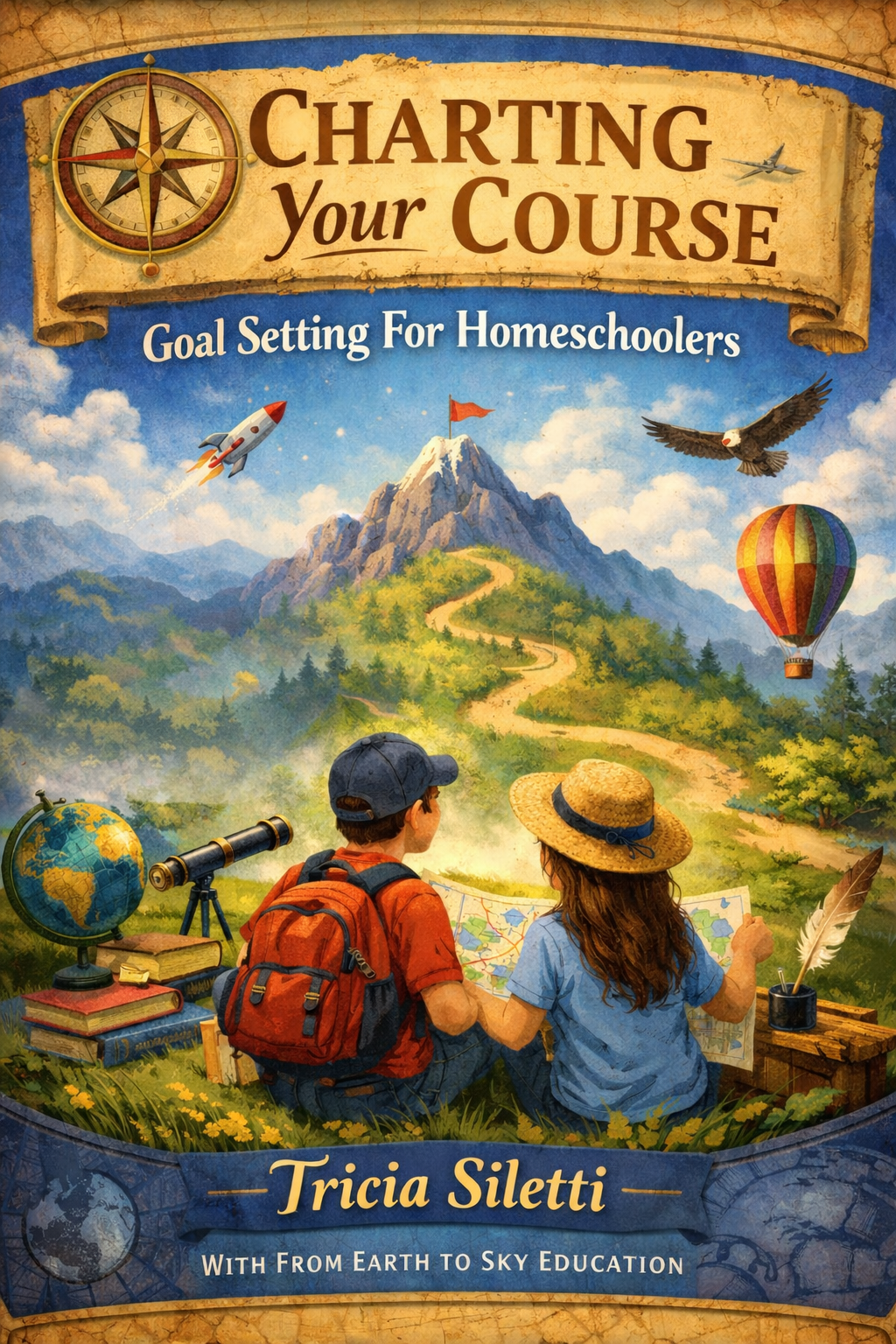
Charting Your Course: Goal Setting for Homeschoolers
By Tricia Siletti | From Earth to Sky Education
What if students learned to design their lives with intention instead of simply completing assignments?
Charting Your Course is a 15-week, hands-on goal-setting course designed specifically for homeschool students in grades 6–12. Instead of focusing on grades and tests, this course teaches one of the most important life skills a young person can develop: how to set meaningful goals and pursue them with clarity, discipline, and resilience.
Students begin by discovering who they are. They explore their values, strengths, interests, and personal story. From there, they learn how to craft a vision for their future and transform their ideas into structured, actionable goals.
But this course goes further than traditional goal-setting programs.
Students are taught to write stretch goals. These are ambitious goals deliberately set slightly beyond what feels comfortable or easily achievable. Stretch goals push students to think creatively, develop new skills, and grow into the kind of person capable of achieving something bigger than they first imagined. Instead of aiming for safe targets, students learn how to pursue goals that expand their potential.
Equally important, students learn what to do when things do not go as planned.
One of the most powerful lessons in this course is that failure is not the opposite of success. It is part of the process. Students are taught a practical Failure Recalibration Framework, which guides them through how to analyze setbacks, extract lessons, adjust their plan, and move forward with greater wisdom and resilience. Charting-Your-Course-Goal-Setti…
Throughout the semester students will:
• Identify their core personal values
• Write a personal vision statement for their future
• Build SMART stretch goals with clear action plans
• Learn time management and habit-building strategies
• Develop resilience, grit, and growth mindset thinking
• Track progress through reflective journaling
• Research a real person who achieved a significant goal
• Complete and present their own personal goal project
The course culminates in a Goal Showcase, where students present their research project and reflect on their personal growth throughout the semester. Charting-Your-Course-Goal-Setti…
Rather than memorizing information, students learn how to direct their own lives.
By the end of this course, students do not just understand goal setting.
They have practiced it, tested it, struggled with it, and experienced the growth that comes from pursuing something that truly matters.
This is not just a class.
It is a framework for a life lived intentionally.
Course Details
Grades: 6–12
Length: 15 Weeks
Format: Discussion, activities, journaling, and project-based learning
Assessment: Portfolio and final presentation rather than traditional tests
Perfect for homeschool co-ops, independent study, or small learning groups.
Course Structure:
30 total sessions (2 per week × 15 weeks)
45-60 minute sessions appropriate for 8-9 year old attention spans
Progressive skill building from basic problem-solving to creating original escape rooms
Multi-subject integration covering math, reading, science, social studies, and arts
Key Features:
🎯 Age-Appropriate Design:
Aligned with 3rd grade developmental capabilities and learning standards
Safety guidelines for materials and activities
Differentiation strategies for various learning styles and needs
📚 Academic Integration:
Math: combination locks, patterns, measurement, geometry
Reading: comprehension clues, vocabulary puzzles, story-based challenges
Science: safe experiments, classification, observation skills
Social Studies: maps, timelines, historical themes
🔗 Extensive Resources:
50+ direct copy-paste links to free educational resources
Complete escape room templates ready for immediate use
Puzzle creation tools and digital platforms
Assessment and documentation materials
💰 Budget-Friendly:
Total material cost: $50-75
Many free and household-item alternatives provided
Extensive free digital resources included
👥 Flexible Implementation:
Works for individual families or homeschool co-ops
Adaptable for 1-6 students
Includes family showcase events and take-home materials
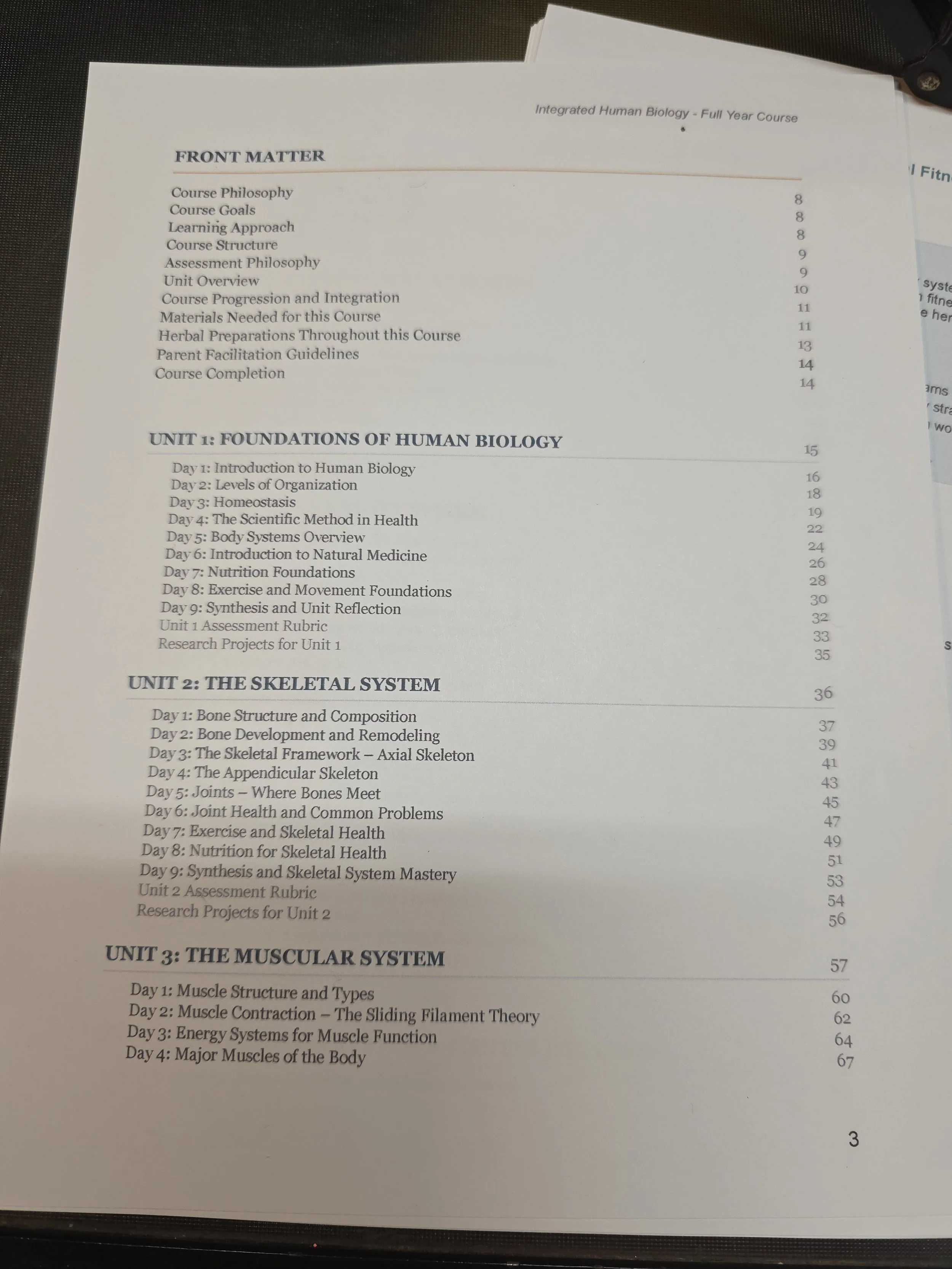
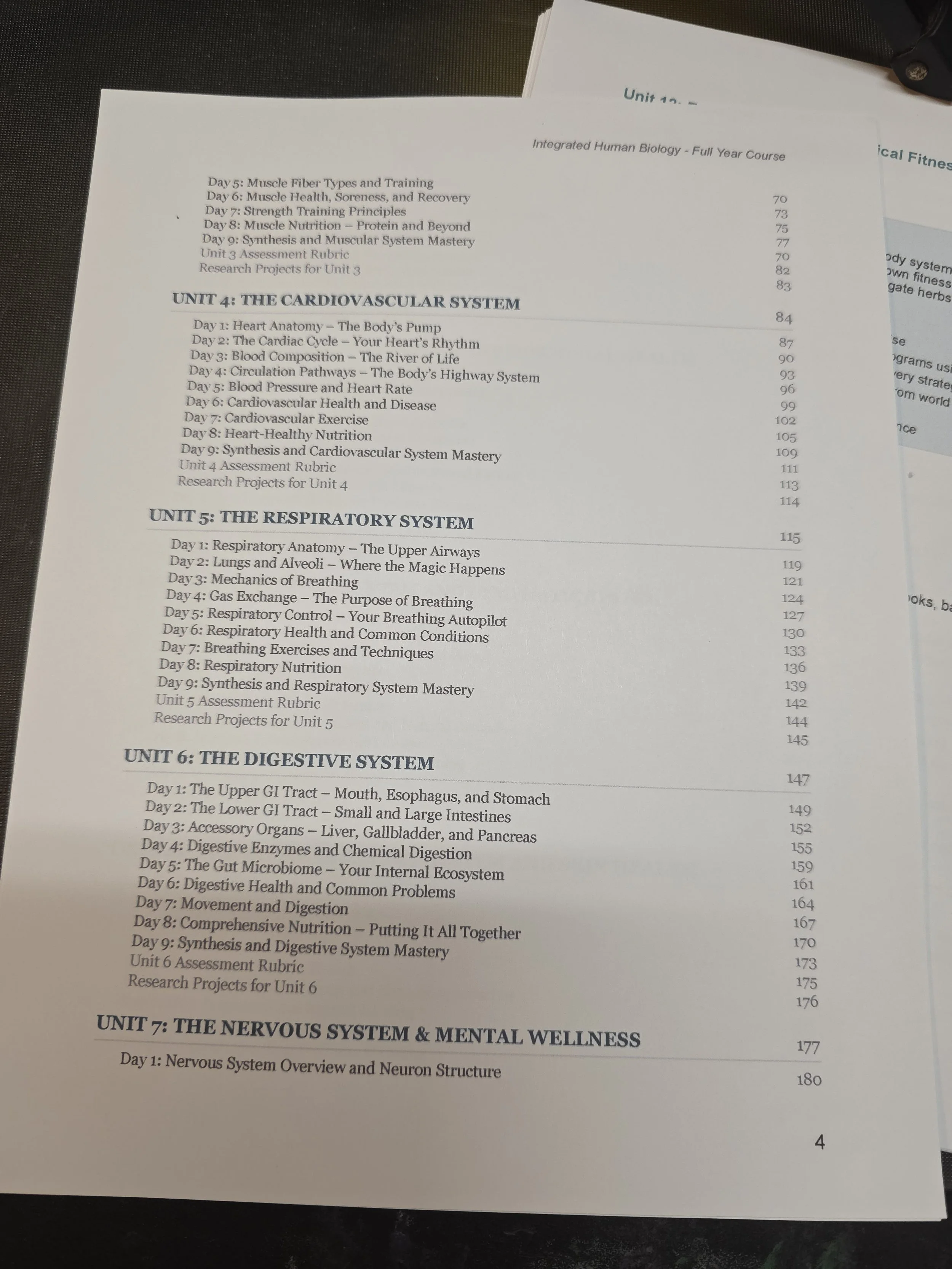
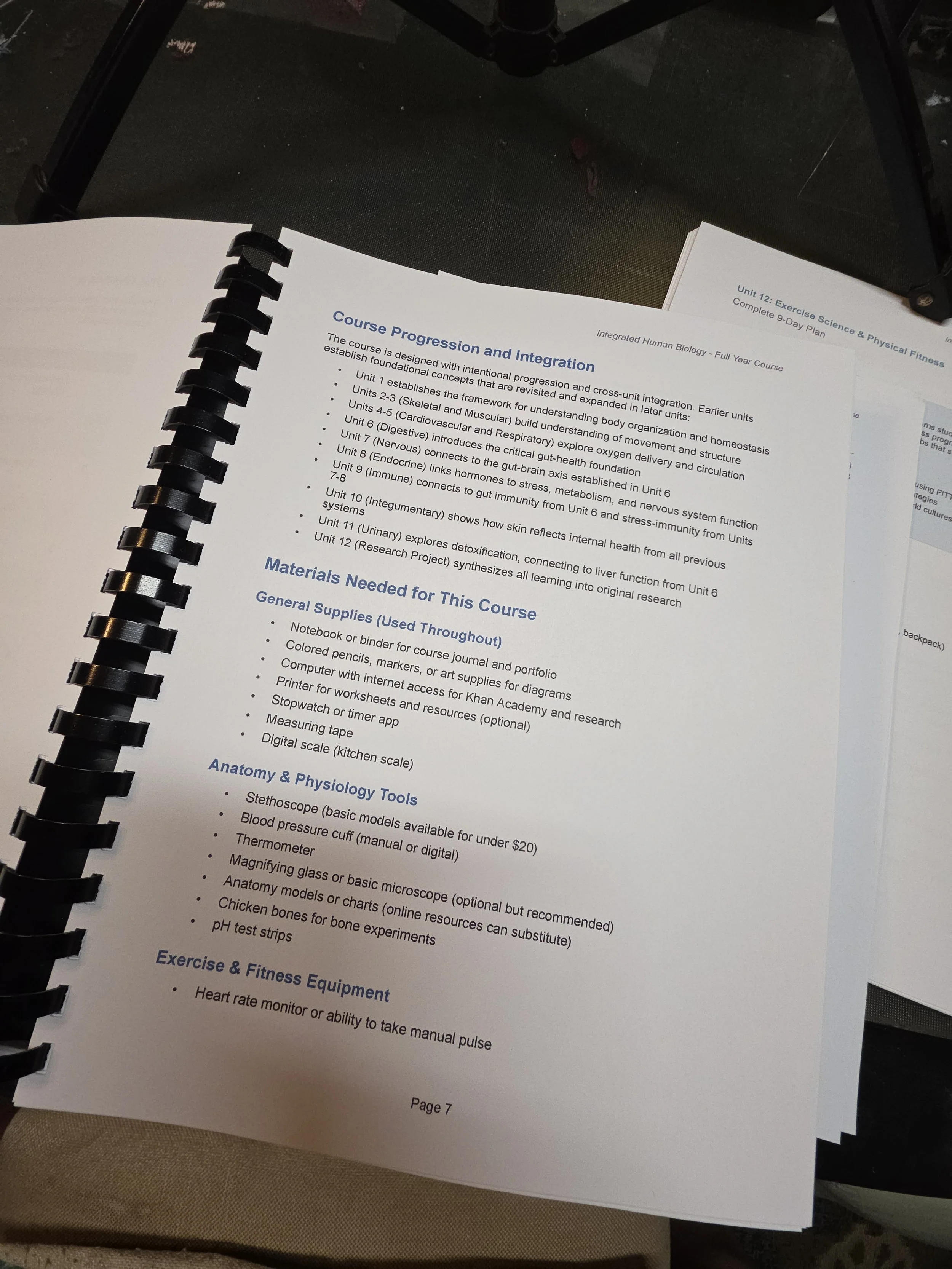
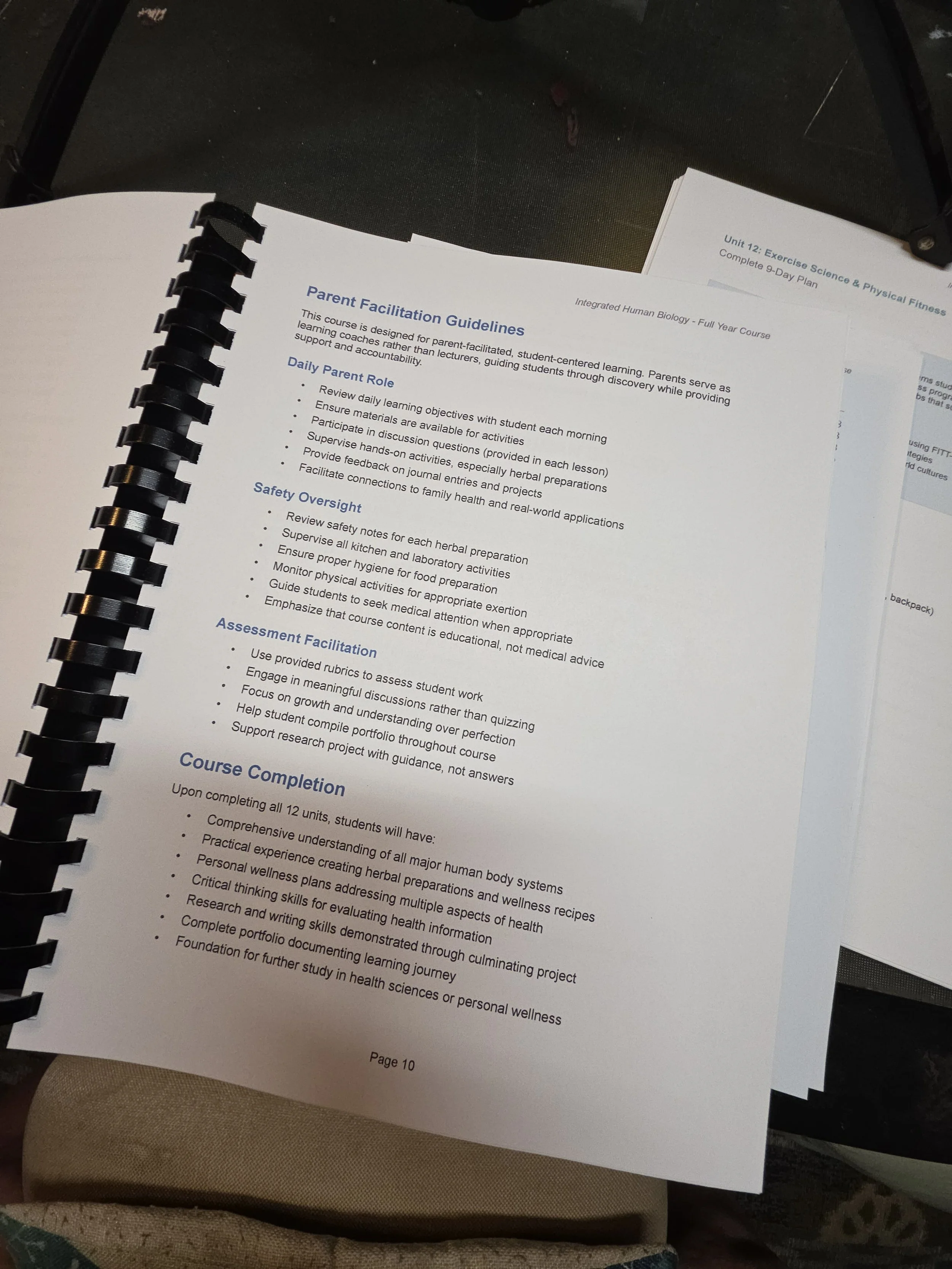
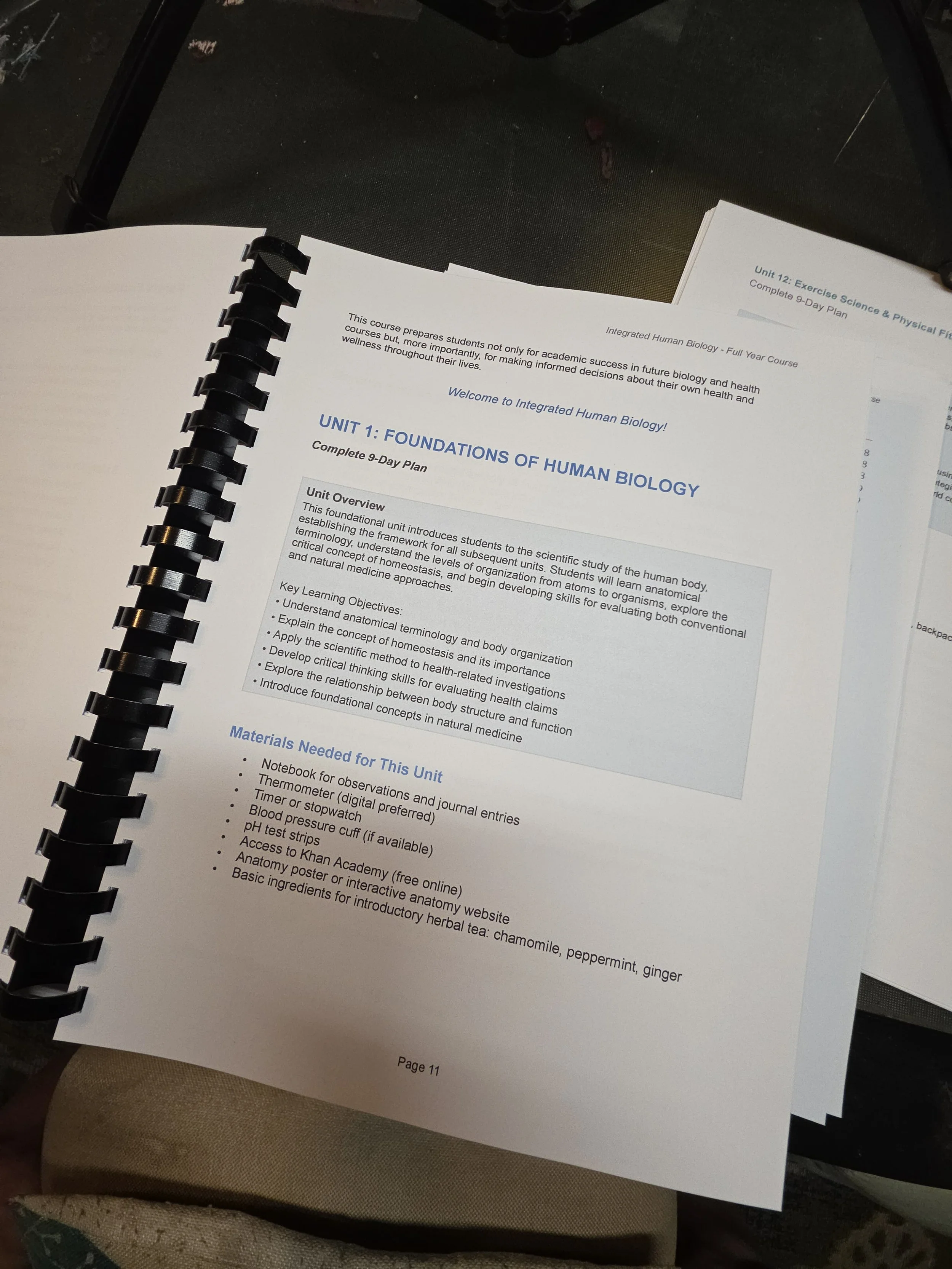
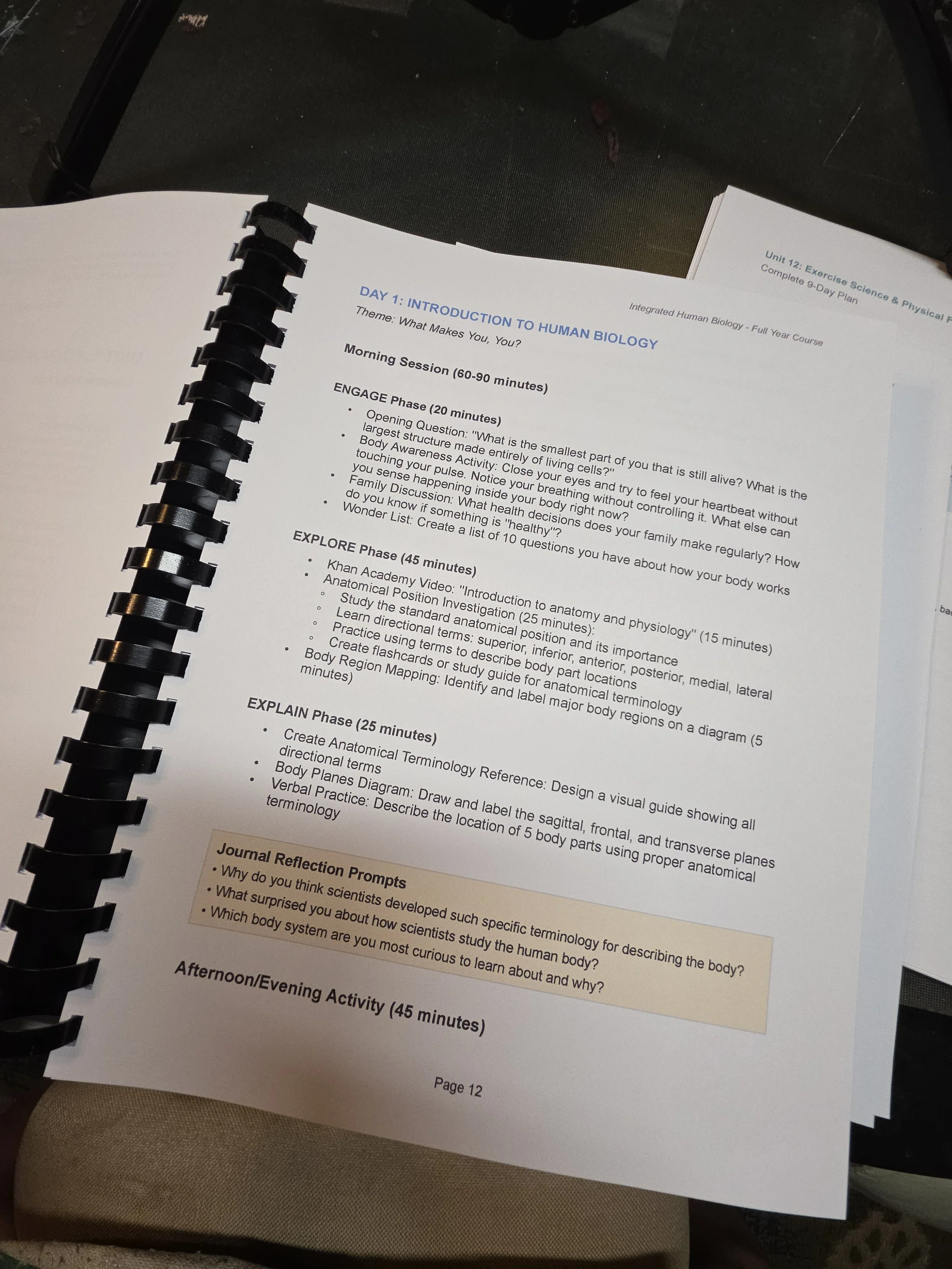
Integrated Human Biology Anatomy, Physiology, Natural Medicine, Exercise & Nutrition
A Complete Full-Year Homeschool Course
Written by From Earth to Sky Education
Integrated Human Biology is a comprehensive, high school–level, full-year homeschool curriculum that delivers five complete courses in one integrated program — for the price of one.
Instead of purchasing separate curricula for biology, health, fitness, nutrition, and natural medicine, this course unifies them into a single, cohesive, academically rigorous learning experience.
Students don’t learn in fragments — they learn in systems.
This is not a textbook-only program. It is a living curriculum built on inquiry, hands-on learning, discussion, journaling, movement, research, and real-world application.
Five Courses in One Integrated Program
This curriculum integrates:
Anatomy
Physiology
Natural Medicine
Exercise Science
Nutrition Science
Each discipline is taught as a complete subject, while being intentionally woven together into a systems-based learning model — giving students a deeper, more functional understanding of health and biology than traditional siloed courses.
Five full courses. One curriculum. One price. One integrated learning experience.
What Makes This Course Different
Holistic Systems-Based Learning
Students explore how body systems interact — how nutrition affects hormones, how movement impacts immunity, how stress influences digestion, and how natural medicine supports physiological balance.
Student-Centered, Parent-Facilitated
Built for independence with guided support, students take ownership of their learning while parents serve as facilitators rather than lecturers.
Hands-On & Experiential
Includes herbal preparations, wellness recipes, movement practices, fitness assessments, experiments, system modeling, journaling, and real-world application projects.
Critical Thinking Focused
Students learn to evaluate health claims, understand research, and analyze both conventional and natural medicine approaches using evidence-based reasoning.
Portfolio & Project Based
Assessment is based on journals, discussions, projects, presentations, and a culminating research project — not rote memorization.
Course Includes
✔ 12 Comprehensive Units
Covering all major body systems
✔ 5 Integrated Disciplines
Anatomy
Physiology
Natural Medicine
Exercise Science
Nutrition
✔ Full-Year Structure
Approximately 36 weeks of instruction
✔ Daily Learning Model
Inquiry-based learning
Hands-on investigations
Herbal and wellness projects
Movement and fitness integration
Discussion-based learning
Reflective journaling
Family dialogue
Independent research
✔ Assessment Style
Journal-based assessment
Discussion-based learning
Project-based demonstrations
Portfolio development
System synthesis projects
Culminating research project
Learning Philosophy
This course is built on the belief that education should prepare students for life, not just tests.
Students learn:
How their bodies function
How to care for their health
How to evaluate health information
How to integrate science with wellness
How to think critically
How to research responsibly
How to make informed decisions
How to understand the body as a system, not a set of parts
This curriculum develops scientific literacy, wellness literacy, and life skills simultaneously.
Ideal For Families Who Want:
Five full courses in one program
High academic rigor without fragmentation
Holistic health education
Real-world application
Project-based learning
Systems thinking
Health literacy as part of education
Integrated science instead of siloed subjects
Strong research foundations
Meaningful parent-student engagement
Preparation for biology, health sciences, wellness, and life skills
Outcomes for Students
By the end of the course, students will:
✔ Master all major human body systems
✔ Understand health as an integrated system
✔ Apply anatomy and physiology to real life
✔ Understand food as biological fuel
✔ Understand movement as medicine
✔ Learn foundational natural medicine principles
✔ Develop research and scientific literacy
✔ Build health evaluation skills
✔ Create a complete learning portfolio
✔ Complete a culminating research project
✔ Gain lifelong health literacy
✔ Build confidence in health-related decision-making
Integrated Human Biology is not just a biology course.
It is five full courses in one:
Biology + Health Science + Nutrition + Exercise Science + Natural Medicine
One curriculum. One structure. One system. One price.
A complete, integrated, future-ready homeschool program designed to raise scientifically literate, health-aware, critically thinking students who understand both the science of the body and the responsibility of caring for it.
Transform Your Approach to Home Education—And Watch Your Children Thrive
A Complete 5-Module Training System | 40-45 Hours | 233 Pages | Certification Upon Completion
What If Everything You Thought You Knew About Teaching Was Wrong?
Here's a truth most parents discover the hard way: the way you were taught in school doesn't match how your child's brain actually learns.
Think about it. You've poured hours into lesson planning. You've bought the curriculum. You've tried explaining concepts six different ways. And still—glazed eyes. Resistance. The daily battle just to get through the basics.
It's not your child. It's not you. It's the model.
Traditional education operates on a flawed assumption: that knowledge flows one direction—from the adult who knows to the child who doesn't. This made sense when books were rare and the local schoolmaster was the only source of learning in town.
But research tells us something different. Students retain only 5-10% of what they hear in a lecture—but up to 90% of what they teach to others.
This course gives you the science-backed framework to stop being the exhausted expert trying to fill empty vessels—and start becoming the facilitator who creates conditions where your children discover, engage, and retain knowledge naturally.
What's Included in This Course
5 Progressive Training Modules
Each module builds on the previous one, giving you both the understanding AND the practical tools to transform your homeschool.
MODULE 1: Foundations of LearningEstimated Time: 8-10 Hours
MODULE 2: Bloom's Taxonomy & Critical Thinking DevelopmentEstimated Time: 8 Hours
MODULE 3: Homeschooling Philosophies & ApproachesEstimated Time: 8 Hours
MODULE 4: Sensory & Contextual LearningEstimated Time: 8 Hours
MODULE 5: Parent as Facilitator & GuideEstimated Time: 9 Hours
What You'll Learn
Upon completing this certification course, you will be able to:
✓ Identify why a lesson isn't working and fix it on the spot
✓ Recognize your child's strongest learning pathways and use them strategically
✓ Design lessons that create lasting understanding instead of temporary memorization
✓ Craft questions that push thinking to higher levels without giving away answers
✓ Create assessments that reveal true understanding (not just test-taking ability)
✓ Blend elements from six major educational philosophies into your own custom approach
✓ Design multi-sensory learning experiences that engage the whole brain
✓ Turn your local community into a learning laboratory
✓ Set up physical spaces that support rather than hinder the learning process
✓ Guide without controlling, question without interrogating, support without rescuing
✓ Build your child's independence and self-direction at every age
✓ Create a family culture where learning happens naturally—even when you're not teaching
BONUS: Complete Lesson Plans Included
BONUS: Strategic Board Games as Educational Tools
Optional Companion Workbook
Available for separate purchase
Take your learning deeper with the companion workbook—a dedicated space for reflection, planning, and implementation.
The workbook includes:
Guided reflection prompts for each module
Fillable planning templates
Child assessment worksheets
Learning environment audit forms
Goal-setting and tracking pages
Space for documenting your certification portfolio
The companion workbook is optional but recommended for parents who want a structured space to process and apply what they're learning.
Who This Course Is For
This course is designed for:
New homeschool parents who want to start with a solid foundation instead of figuring it out through trial and error
Experienced homeschoolers who feel stuck in patterns that aren't working and want fresh approaches
Parents frustrated with traditional methods who sense there must be a better way
Families with multiple children who need flexible systems that work across ages
Parents of struggling learners who haven't thrived in conventional educational settings
Anyone who believes their children are capable of more than worksheets and compliance
What Other Parents Are Discovering
"I used to stand at the whiteboard explaining concepts until I was exhausted. Now I ask questions and watch my kids figure things out themselves. They remember more, and I'm not burned out by noon." -Leah C.
"The section on learning styles changed everything. My 'difficult' child isn't difficult—he's kinesthetic. Once I stopped fighting his need to move and started building lessons around it, everything shifted." - Collins K.
"I was skeptical about stepping back and letting my kids lead more. But the framework in Module 5 showed me exactly how to do it without chaos. My 10-year-old now manages her own weekly learning plan." - Ashley H.
Your Investment
You're not just buying a course. You're investing in:
A complete transformation of how you think about education
Practical skills you'll use every day for years
A framework that grows with your children from kindergarten through high school
The confidence that comes from understanding why your methods work
Freedom from the exhausting role of "expert who must know everything"
A family culture where learning becomes as natural as breathing
"Education is not the filling of a pail, but the lighting of a fire." — William Butler Yeats
Your journey from teacher to facilitator begins here.
Trust the process. Embrace the messiness. Watch your family's love of learning flourish.
Your Hands-On Companion for Transforming Knowledge Into Action
246 Pages of Guided Implementation | 5 Complete Module Workbooks | Reflection, Planning & Portfolio Documentation
Knowledge Without Application Is Just Information
You've invested in The Homeschool Facilitator Certification Course. You understand the science of how children learn. You've read about facilitation techniques, educational philosophies, and building student agency.
But understanding and doing are two different things.
This is where most parents get stuck. They finish a course feeling inspired—then return to the same patterns within a week. Not because the information wasn't good, but because they never had a structured space to process it, plan it, and make it their own.
The Homeschool Facilitator Certification Workbook bridges that gap.
This isn't busywork. This is the implementation system that transforms concepts into daily practice—the guided space where you take what you've learned and build something that actually works for your family.
What This Workbook Does For You
Turns Reading Into Reflection
Each module includes carefully crafted reflection prompts that force you to stop and think: How does this apply to MY child? What does this mean for MY homeschool? Where am I already doing this well? Where do I need to grow?
These aren't generic questions. They're designed to connect course concepts directly to your specific situation.
Turns Concepts Into Plans
Ideas without implementation plans remain ideas. This workbook provides structured planning templates for every major concept in the course—so you walk away from each module with actual, written plans you can execute.
Turns Activities Into Documentation
The certification requires a portfolio demonstrating your learning and implementation. This workbook provides organized space to document everything:
Hands-on activities completed
Student work samples
Observation notes
Progress tracking
Evidence of transformation
No more scattered notes across random notebooks. Everything lives in one comprehensive system.
Turns Isolation Into Accountability
Working through a course alone is hard. The workbook creates built-in accountability through:
Weekly check-in prompts
Progress tracking pages
Goal-setting frameworks
Self-assessment rubrics
Even without a study partner, you'll have a structured system keeping you on track.
Workbook Specifications
Total Length 246 pages
Number of Sections 5 complete module workbooks
Format Downloadable PDF (printable)
Designed For Use alongside The Homeschool Facilitator Certification Course
Includes Reflection prompts, planning templates, assessment tools, documentation space
What You'll Accomplish With This Workbook
By working through this complete workbook, you will:
✓ Complete a thorough self-assessment of your own learning patterns and teaching tendencies
✓ Create detailed Individual Learner Profiles for each of your children
✓ Draft and refine your Family Education Philosophy Statement
✓ Design your personalized hybrid educational approach
✓ Build daily, weekly, monthly, and yearly planning systems that actually work
✓ Develop your own question banks organized by thinking level
✓ Conduct a complete sensory profile assessment for your family
✓ Audit and transform your learning environment
✓ Map community learning resources you've never considered
✓ Practice and track your facilitation skill development
✓ Create learning contracts with your children
✓ Design family learning traditions and rituals
✓ Document everything needed for your certification portfolio
✓ Track your transformation from teacher to facilitator over time
Who This Workbook Is For
This workbook is designed for parents who:
Have purchased The Homeschool Facilitator Certification Course
Learn best by writing, reflecting, and processing on paper
Want structured accountability to actually implement what they learn
Plan to complete the certification and need organized portfolio documentation
Prefer having dedicated space for planning rather than scattered notes
Value having everything in one comprehensive system
What This Workbook Is NOT
This is a companion workbook, not a standalone product.
The workbook is designed to be used alongside The Homeschool Facilitator Certification Course. It contains reflection prompts, planning templates, and documentation space—but not the core teaching content, learning science explanations, or implementation guidance found in the main course.
If you haven't purchased the main course, start there first.
Your Complete Implementation System
The Homeschool Facilitator Certification Course gives you the knowledge.
The workbook helps you make it yours.
This is where concepts become plans. Where understanding becomes action. Where a course you completed becomes a transformation you live.
"Knowledge is not power. Knowledge applied is power."
Bundle & Save
Purchase the Complete Course + Workbook together and save.
Get everything you need for complete transformation:
The Homeschool Facilitator Certification Course (233 pages)
The Homeschool Facilitator Certification Workbook (246 pages)
All bonus lesson plans and implementation guides
Strategic Board Games bonus section
No results found
No results match your search. Try removing a few filters.