 Image 1 of 1
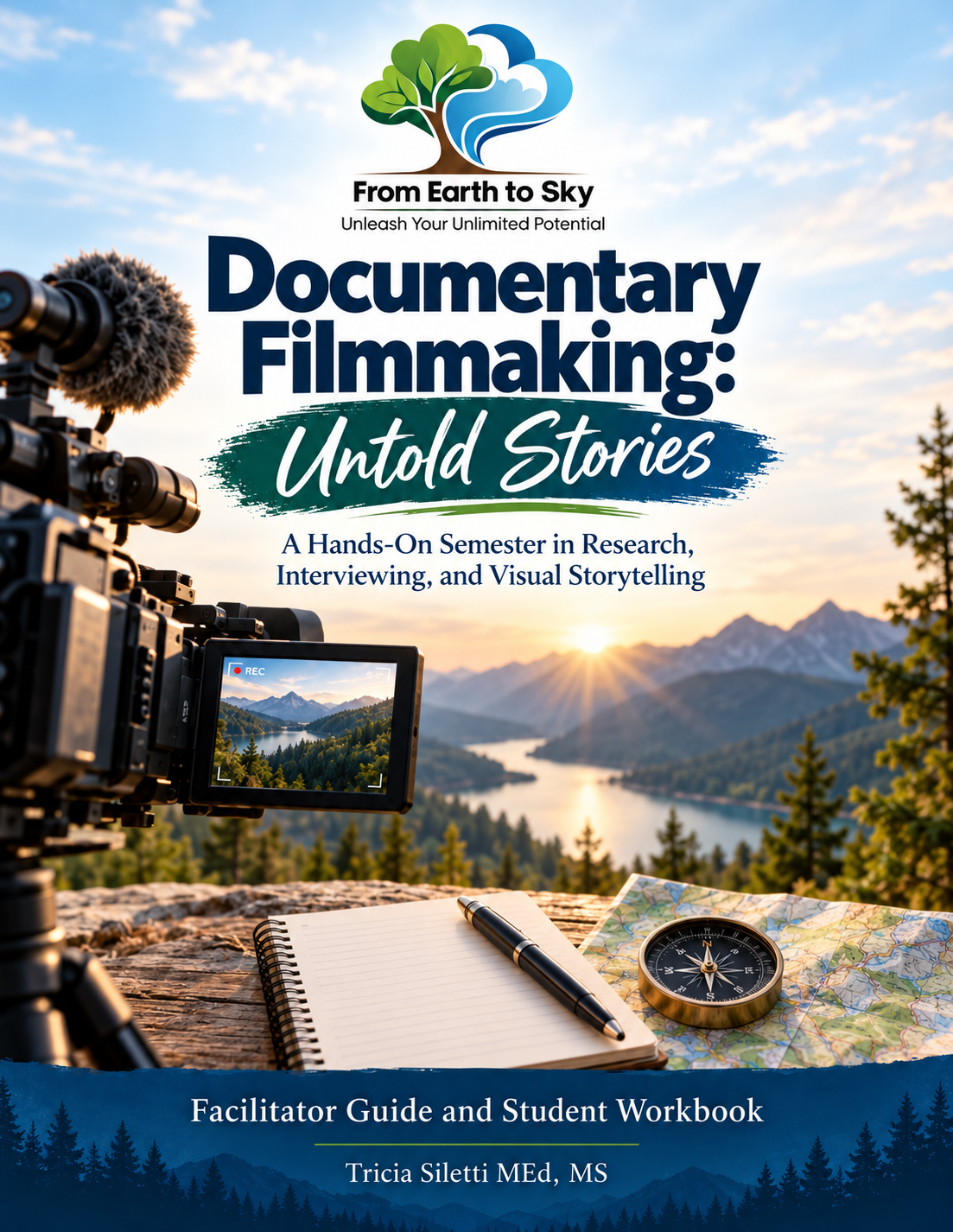
Documentary Filmmaking: Untold Stories is an immersive, hands-on high school documentary filmmaking curriculum that takes students beyond simply watching and analyzing films. Over one semester, students research a real untold story, interview people connected to it, verify evidence, capture original footage, edit their work, and produce a finished documentary project.
Designed for grades 9–12, this 18-week course combines filmmaking, journalism, historical research, interviewing, media literacy, visual storytelling, ethics, writing, and critical thinking into one meaningful project-based learning experience. Students complete 36 guided sessions and earn approximately one-half high school credit through a portfolio-based course with no traditional tests.
Instead of creating a fictional film or simply studying the work of professional filmmakers, students search their own communities for stories that have been overlooked, forgotten, poorly documented, or never fully told. They learn how to locate primary sources, visit archives, conduct interviews, file public-records requests, verify claims using multiple independent sources, organize research, plan a production, record quality audio and video, and make thoughtful editing decisions.
Research an overlooked local history or contemporary story
Distinguish between primary, secondary, and tertiary sources
Verify factual claims using a three-source standard
Conduct archival and historical research
Develop strong documentary interview questions
Conduct and record professional-style interviews
Understand documentary ethics and informed consent
Master foundational camera shots and composition
Record B-roll and location sound
Create shooting scripts, call sheets, source logs, and shot logs
Transcribe and organize interviews
Develop a documentary treatment and story structure
Edit a documentary from rough cut through picture lock
Use sound, titles, captions, and visual storytelling intentionally
Evaluate their own filmmaking decisions through Socratic discussion
Write an accompanying research-based Evidence Paper
Present and defend their creative and research choices
The semester is organized into six units covering documentary truth and ethics, research, interviewing, cinematography, editing, and final release. Students progress from finding their story to producing and screening a completed documentary while learning the responsibility that comes with telling someone else's story.
This complete course includes both a Facilitator Guide and Student Workbook, giving homeschool parents, teachers, and independent learners everything needed to run the semester.
The Facilitator Guide includes 36 scripted sessions, activity instructions, materials lists, facilitator tips, safety and permission guidance, assessment tools, rubrics, standards alignment, transcript language, Socratic discussion plans, and week-by-week troubleshooting guidance. The Student Workbook includes approximately 20 student templates, including source logs, verification grids, interview planning pages, call sheets, shot logs, release forms, feedback forms, and other production tools.
No filmmaking experience is required for the facilitator. Students can complete the course using equipment many families already own, including a smartphone, tripod or phone clamp, wired microphone, headphones, and free editing software.
Rather than assigning work strictly by grade level, the course includes three learner bands:
The Apprentice for first-time filmmakers
The Field Producer for students with some experience
The Director for experienced, independent students
Film length, interview requirements, primary-source expectations, and Evidence Paper length increase with each level, allowing a ninth grader and a senior to use the same curriculum while working at appropriately challenging levels.
This course works especially well for:
Homeschool high school students
Media arts electives
Documentary filmmaking classes
Journalism and communications courses
Project-based learning
Visual storytelling
Film and video production
Local history studies
Oral history projects
Career and Technical Education electives
Independent study
Portfolio-based homeschool programs
Worldschooling families
Students interested in film, journalism, history, research, or storytelling
Students finish the semester with more than an assignment. They leave with an original documentary project, research paper, production portfolio, interviews, source documentation, and the experience of finding a true story and earning the right to tell it.
Grades: 9–12
Length: 18 Weeks / One Semester
Credit: ½ High School Credit
Sessions: 36
Assessment: Portfolio, Field Journal, Socratic Discussions, Evidence Paper, Documentary & Oral Defense
Format: Facilitator Guide + Student Workbook
Experience Required: None
Documentary Filmmaking: Untold Stories is an immersive, hands-on high school documentary filmmaking curriculum that takes students beyond simply watching and analyzing films. Over one semester, students research a real untold story, interview people connected to it, verify evidence, capture original footage, edit their work, and produce a finished documentary project.
Designed for grades 9–12, this 18-week course combines filmmaking, journalism, historical research, interviewing, media literacy, visual storytelling, ethics, writing, and critical thinking into one meaningful project-based learning experience. Students complete 36 guided sessions and earn approximately one-half high school credit through a portfolio-based course with no traditional tests.
Instead of creating a fictional film or simply studying the work of professional filmmakers, students search their own communities for stories that have been overlooked, forgotten, poorly documented, or never fully told. They learn how to locate primary sources, visit archives, conduct interviews, file public-records requests, verify claims using multiple independent sources, organize research, plan a production, record quality audio and video, and make thoughtful editing decisions.
Research an overlooked local history or contemporary story
Distinguish between primary, secondary, and tertiary sources
Verify factual claims using a three-source standard
Conduct archival and historical research
Develop strong documentary interview questions
Conduct and record professional-style interviews
Understand documentary ethics and informed consent
Master foundational camera shots and composition
Record B-roll and location sound
Create shooting scripts, call sheets, source logs, and shot logs
Transcribe and organize interviews
Develop a documentary treatment and story structure
Edit a documentary from rough cut through picture lock
Use sound, titles, captions, and visual storytelling intentionally
Evaluate their own filmmaking decisions through Socratic discussion
Write an accompanying research-based Evidence Paper
Present and defend their creative and research choices
The semester is organized into six units covering documentary truth and ethics, research, interviewing, cinematography, editing, and final release. Students progress from finding their story to producing and screening a completed documentary while learning the responsibility that comes with telling someone else's story.
This complete course includes both a Facilitator Guide and Student Workbook, giving homeschool parents, teachers, and independent learners everything needed to run the semester.
The Facilitator Guide includes 36 scripted sessions, activity instructions, materials lists, facilitator tips, safety and permission guidance, assessment tools, rubrics, standards alignment, transcript language, Socratic discussion plans, and week-by-week troubleshooting guidance. The Student Workbook includes approximately 20 student templates, including source logs, verification grids, interview planning pages, call sheets, shot logs, release forms, feedback forms, and other production tools.
No filmmaking experience is required for the facilitator. Students can complete the course using equipment many families already own, including a smartphone, tripod or phone clamp, wired microphone, headphones, and free editing software.
Rather than assigning work strictly by grade level, the course includes three learner bands:
The Apprentice for first-time filmmakers
The Field Producer for students with some experience
The Director for experienced, independent students
Film length, interview requirements, primary-source expectations, and Evidence Paper length increase with each level, allowing a ninth grader and a senior to use the same curriculum while working at appropriately challenging levels.
This course works especially well for:
Homeschool high school students
Media arts electives
Documentary filmmaking classes
Journalism and communications courses
Project-based learning
Visual storytelling
Film and video production
Local history studies
Oral history projects
Career and Technical Education electives
Independent study
Portfolio-based homeschool programs
Worldschooling families
Students interested in film, journalism, history, research, or storytelling
Students finish the semester with more than an assignment. They leave with an original documentary project, research paper, production portfolio, interviews, source documentation, and the experience of finding a true story and earning the right to tell it.
Grades: 9–12
Length: 18 Weeks / One Semester
Credit: ½ High School Credit
Sessions: 36
Assessment: Portfolio, Field Journal, Socratic Discussions, Evidence Paper, Documentary & Oral Defense
Format: Facilitator Guide + Student Workbook
Experience Required: None