 Image 1 of 1
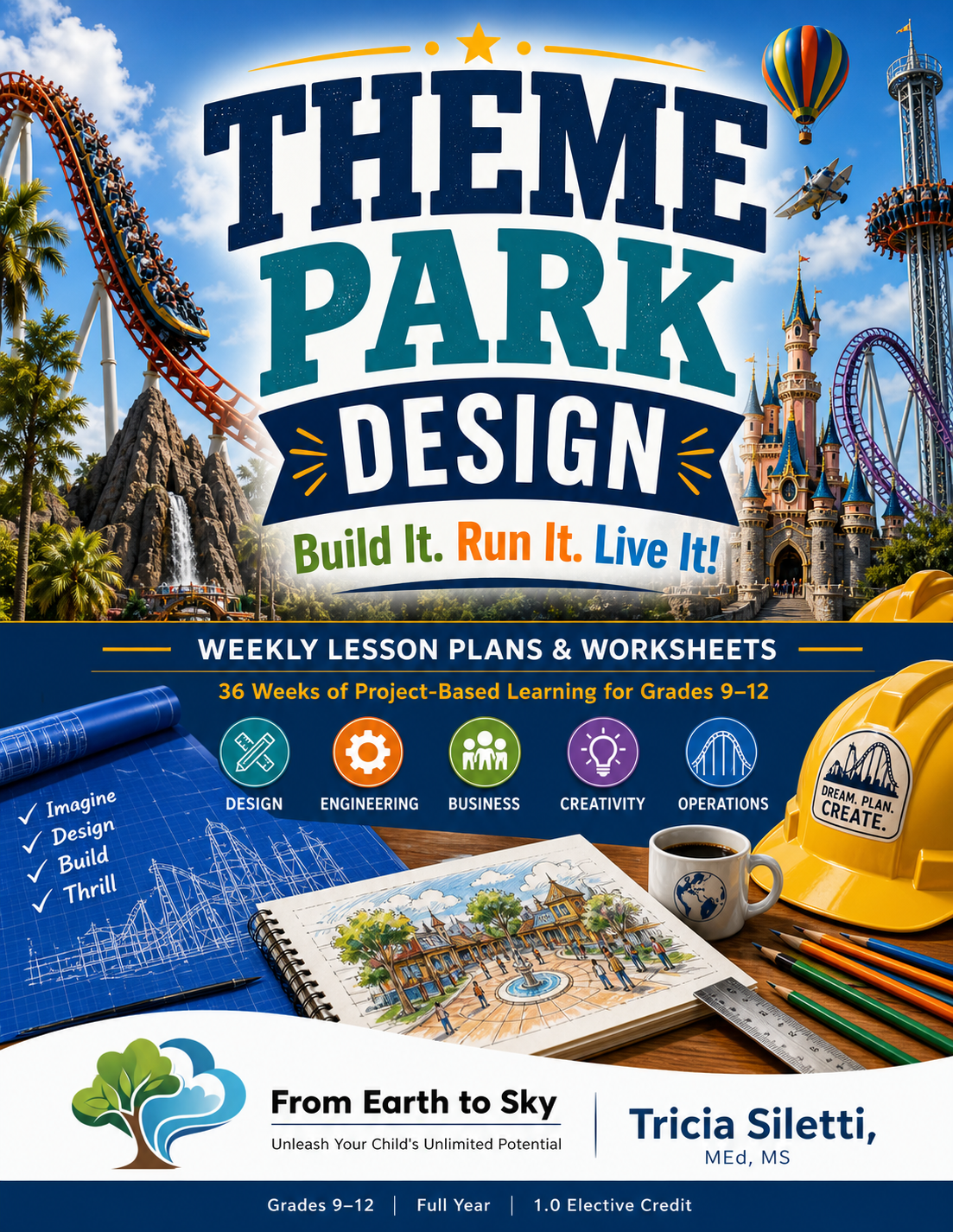
In this immersive, project-based course, students take on the role of theme park creators, engineers, entrepreneurs, and storytellers as they design an original theme park from the ground up. From the first spark of an idea to a fully developed business and design portfolio, students will plan, calculate, build, and present a complete park concept.
Grounded in real-world application, this course weaves together STEM, business, design, and communication skills into one cohesive, high-interest experience. Every lesson directly contributes to a final product: a fully realized Theme Park Design Dossier and presentation.
This course is comprehensive and thorough, guiding students step-by-step through the entire design and business process behind a working theme park.
Students will not just learn concepts. They will apply them immediately through meaningful, hands-on projects.
It can be completed:
Individually for independent learners and homeschool students
Collaboratively as a team, making it ideal for co-ops, classrooms, or group projects
Whether working solo or as part of a design team, students take ownership of their park and their learning.
Students develop skills across multiple disciplines, including:
Engineering & Physics
Design roller coasters and attractions using real-world physics principles
Mathematics
Apply calculations for budgeting, capacity, pricing, and profit
Entrepreneurship & Business Planning
Build a startup budget, revenue model, and break-even analysis
Creative Design & Branding
Create park themes, characters, logos, and marketing campaigns
Research & Data Analysis
Conduct surveys, analyze results, and make data-driven decisions
Communication & Presentation
Pitch their park idea in a professional, stakeholder-style presentation
By the end of the course, each student or team will have developed:
A fully themed and branded original theme park concept
A park map and land design
A minimum of 8 attractions, including a featured ride design
A physical ride model (hands-on engineering project)
A cast of original park characters
A complete food and beverage program with pricing
A detailed financial plan and startup budget
A marketing campaign and brand identity package
A primary research report based on real survey data
A final Theme Park Design Dossier and presentation
36 weeks of structured, step-by-step instruction
Weekly lessons include:
Skill-based teaching
Hands-on project tasks
Reflection and assessment
Optional worksheets for math and science concepts
This course is designed to be open-and-go for facilitators, while still allowing flexibility for creativity and pacing.
Grades 9–12 (adaptable for advanced middle school students)
Homeschool families
Co-ops and small group learning environments
Classrooms looking for a high-engagement elective or STEM project course
Students finish this course not just with knowledge, but with something real.
A complete, professional-level project that reflects:
Their creativity
Their critical thinking
Their ability to take an idea and turn it into something tangible
This is the kind of course students remember. The kind they talk about. The kind that builds confidence because they can see what they created.
If you want a course that blends imagination with real-world skills, this one opens the gates and lets students build the park.
In this immersive, project-based course, students take on the role of theme park creators, engineers, entrepreneurs, and storytellers as they design an original theme park from the ground up. From the first spark of an idea to a fully developed business and design portfolio, students will plan, calculate, build, and present a complete park concept.
Grounded in real-world application, this course weaves together STEM, business, design, and communication skills into one cohesive, high-interest experience. Every lesson directly contributes to a final product: a fully realized Theme Park Design Dossier and presentation.
This course is comprehensive and thorough, guiding students step-by-step through the entire design and business process behind a working theme park.
Students will not just learn concepts. They will apply them immediately through meaningful, hands-on projects.
It can be completed:
Individually for independent learners and homeschool students
Collaboratively as a team, making it ideal for co-ops, classrooms, or group projects
Whether working solo or as part of a design team, students take ownership of their park and their learning.
Students develop skills across multiple disciplines, including:
Engineering & Physics
Design roller coasters and attractions using real-world physics principles
Mathematics
Apply calculations for budgeting, capacity, pricing, and profit
Entrepreneurship & Business Planning
Build a startup budget, revenue model, and break-even analysis
Creative Design & Branding
Create park themes, characters, logos, and marketing campaigns
Research & Data Analysis
Conduct surveys, analyze results, and make data-driven decisions
Communication & Presentation
Pitch their park idea in a professional, stakeholder-style presentation
By the end of the course, each student or team will have developed:
A fully themed and branded original theme park concept
A park map and land design
A minimum of 8 attractions, including a featured ride design
A physical ride model (hands-on engineering project)
A cast of original park characters
A complete food and beverage program with pricing
A detailed financial plan and startup budget
A marketing campaign and brand identity package
A primary research report based on real survey data
A final Theme Park Design Dossier and presentation
36 weeks of structured, step-by-step instruction
Weekly lessons include:
Skill-based teaching
Hands-on project tasks
Reflection and assessment
Optional worksheets for math and science concepts
This course is designed to be open-and-go for facilitators, while still allowing flexibility for creativity and pacing.
Grades 9–12 (adaptable for advanced middle school students)
Homeschool families
Co-ops and small group learning environments
Classrooms looking for a high-engagement elective or STEM project course
Students finish this course not just with knowledge, but with something real.
A complete, professional-level project that reflects:
Their creativity
Their critical thinking
Their ability to take an idea and turn it into something tangible
This is the kind of course students remember. The kind they talk about. The kind that builds confidence because they can see what they created.
If you want a course that blends imagination with real-world skills, this one opens the gates and lets students build the park.